
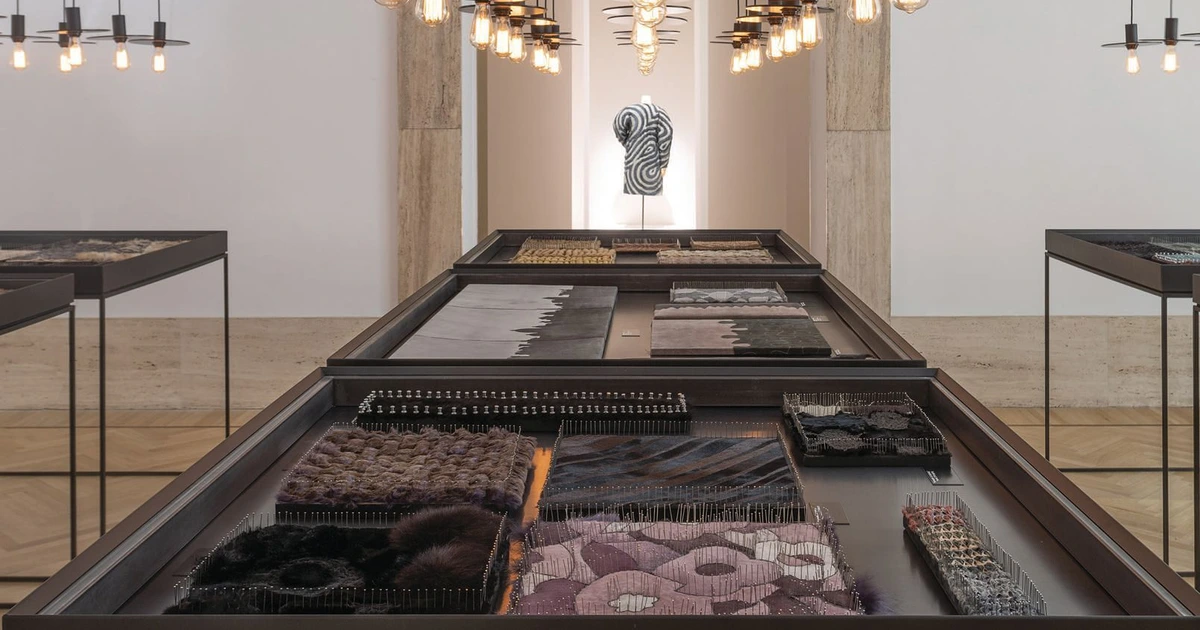
The effect is less about displaying craftsmanship than exploring what craftsmanship can make possible.
There is also a deliberate connection to Fendi’s past. Chiuri looked to Histoire d’Eau, the 1977 fashion film by Jacques de Bascher, commissioned by Karl Lagerfeld for his first ready-to-wear collection for the house. Its young German heroine embodied a particular kind of freedom as she moved through Rome—innocent, sensual and completely unselfconscious. That spirit finds a contemporary expression in Chiuri’s collection.
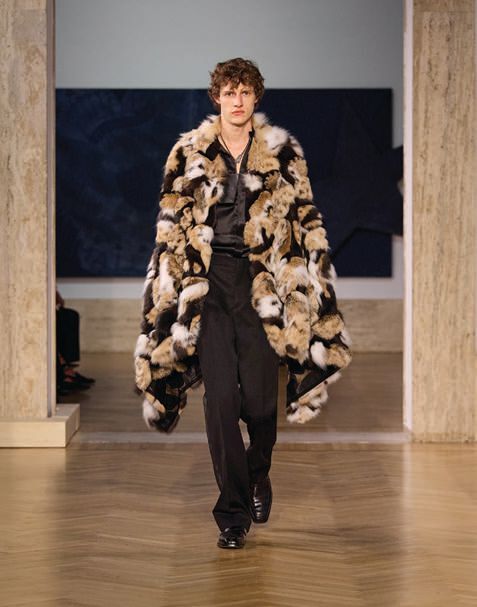
Looks from Fendi’s couture fall 2026 show at the Galleria Nazionale d’Arte Moderna e Contemporanea
If the couture collection looks forward, another Fendi project in Rome looks back— and then asks what the past can mean now.
At the Galleria Nazionale d’Arte Moderna e Contemporanea, Fendi has reopened After Un percorso di lavoro. Fendi / Karl Lagerfeld 1985—After Steps Through Work, a contemporary reimagining of the groundbreaking exhibition first presented at the museum in 1985. The original show documented the first two decades of Lagerfeld’s collaboration with Fendi, making the creative process itself the subject.
Rather than simply displaying finished garments, Lagerfeld exposed the work behind them: sketches, patterns, toiles, material experiments and the techniques developed inside the Fendi ateliers. The result was an unusually intimate look at how an idea becomes clothing.
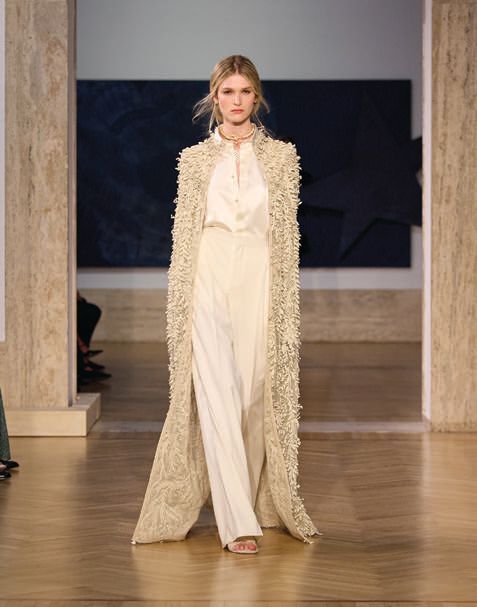
Looks from Fendi’s couture fall 2026 show at the Galleria Nazionale d’Arte Moderna e Contemporanea
The new exhibition retains that spirit while acknowledging the distance of four decades. Some original pieces have been recovered, while others have been recreated through heritage reproductions. The installation has also been adapted to its contemporary surroundings, making this less a reconstruction than a conversation between two moments in Fendi’s history.
Among its most compelling elements are the sample boards, where experiments in fur, color and technique become compositions in their own right. Lagerfeld’s drawings offer another window into his process, revealing how ideas evolved from season to season. In the central theater, fur garments are suspended and set in motion by visible rails, bridges and pulleys, transforming finished pieces into something closer to kinetic sculpture.
It is a fitting image for Fendi: clothing that refuses to stand still.
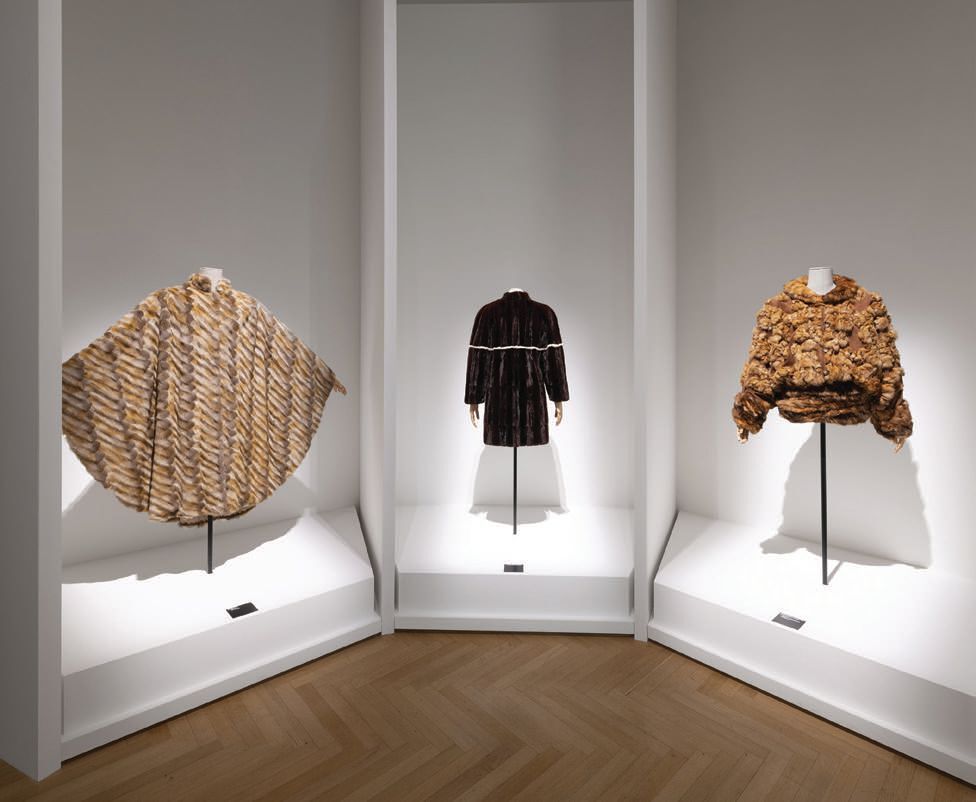
The exhibition’s Kaleidoscope section places Fendi archival garments into octagonal gallery bays for visitors to explore up close.
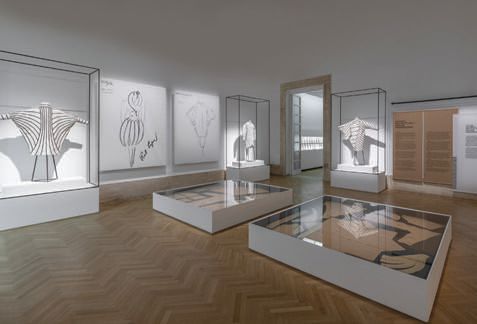
After un percorso di lavoro. Fendi / Karl Lagerfeld 1985 is on view through Oct. 25
The exhibition ultimately makes clear that the house’s history is not simply about iconic garments or famous designers. It is about an ongoing willingness to experiment with materials, technique and the very definition of fashion.
That idea connects Lagerfeld’s Fendi to Chiuri’s first couture collection. One begins with sketches and process; the other begins with the body and desire. Both arrive at the same conclusion: The most enduring fashion is rarely static.
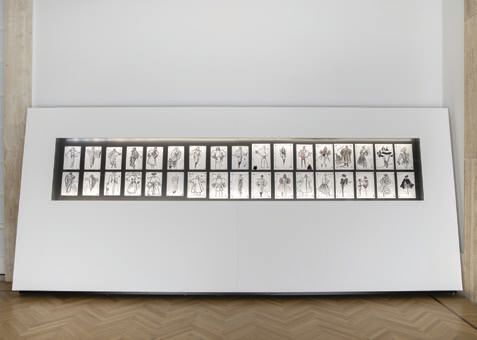
The exhibition features 180 sketches.
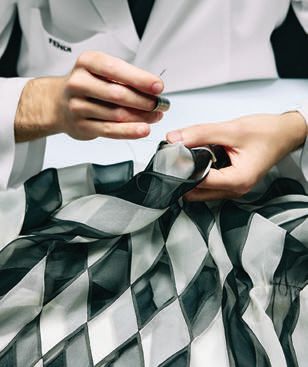
The making of Fendi’s couture fall 2026 collection
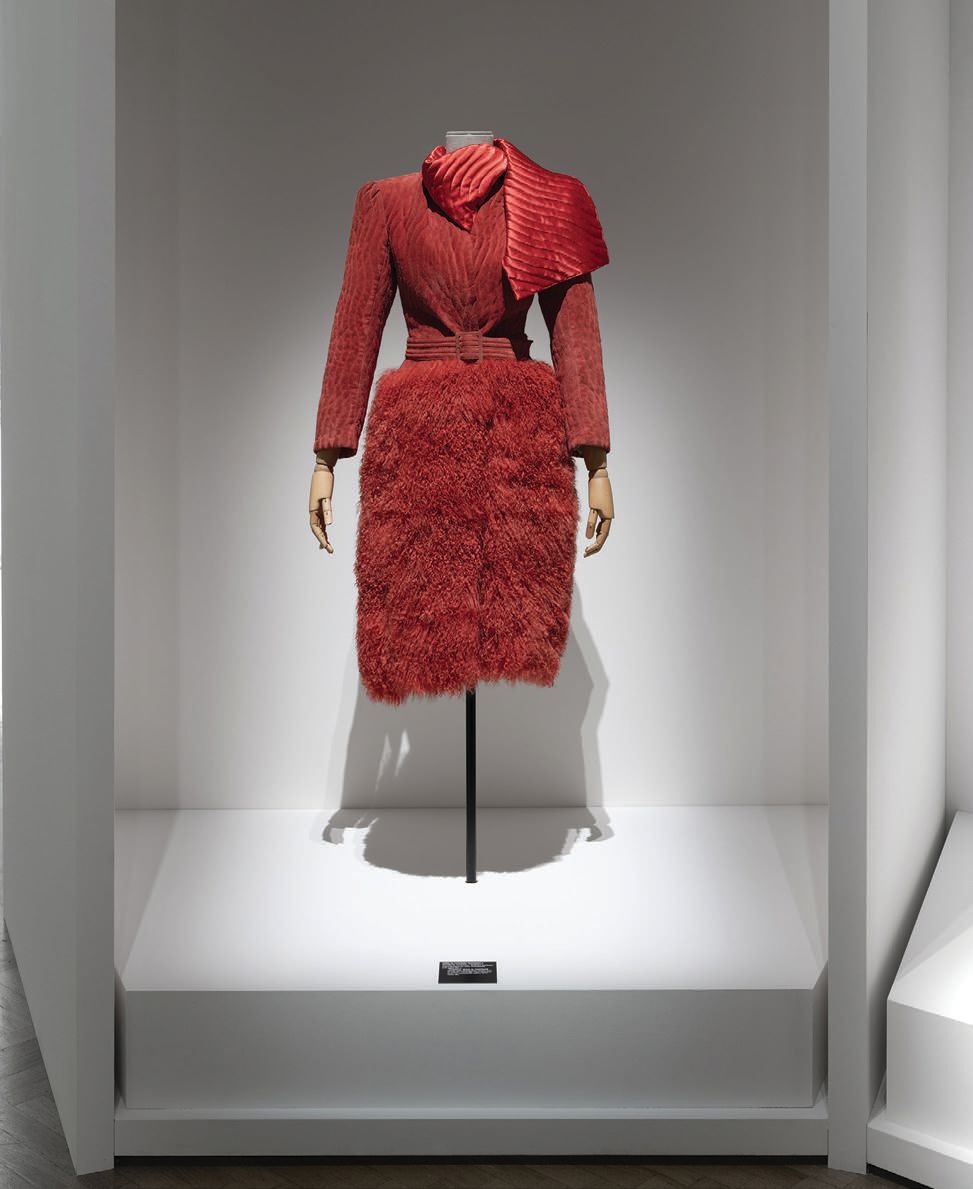
A vintage Fendi look by Lagerfeld is on display.
In Rome, Fendi is looking backward without nostalgia—and forward without forgetting where it came from.