
For the first generation of superyacht owners, the vessel itself was the destination. The yacht existed to be seen — moored in Monaco during the Grand Prix, anchored off Porto Cervo in August, berthed at St Barts for New Year’s Eve. The itinerary was as much about social positioning as it was about the sea.
That era is not over, but it is being profoundly augmented by a new ownership philosophy — one that prizes capability over display, range over glamour, and the ability to reach places that conventional yachts cannot. The explorer yacht, once a niche curiosity within the superyacht world, has become its most compelling and fastest-growing category. And 2026 is the year it reaches critical mass.
What Defines an Explorer Yacht
An explorer yacht is not simply a large motor yacht with a rugged aesthetic. It is a fundamentally different kind of vessel — designed from the keel up for extended voyages in challenging conditions, with the structural reinforcement, fuel capacity, and self-sufficiency necessary to operate far from established maritime infrastructure.
Ice-class hulls allow passage through polar regions. Extended fuel capacity provides range measured in thousands of nautical miles rather than hundreds. Tender garages accommodate not just conventional launches but submarines, helicopters, and expedition craft. And the interior, while every bit as luxurious as a conventional superyacht, is configured for the specific demands of expedition cruising: robust materials that withstand harsh conditions, storage for diving and exploration equipment, and layouts designed for extended periods at sea.
The Class of 2026
This year’s delivery pipeline includes several vessels that embody the category’s evolution. Lürssen’s Project Shackleton — named, with appropriate ambition, after the great polar explorer — is a 107-metre ice-class vessel that has been under construction for over seven years. With reinforced hull, laboratory facilities, and cargo-carrying capacity on its open aft deck, Shackleton is designed for high-latitude voyages that would be impossible for a conventional yacht.
Freire’s 107-metre Project Incógnita, built by the Spanish shipyard known primarily for commercial and research vessels, reflects a different interpretation of the explorer concept: long-range capability with a deliberately understated profile. The yacht’s axe bow and six-thousand-nautical-mile range position it for the kind of discreet, extended cruising that appeals to owners who prefer their privacy absolute.
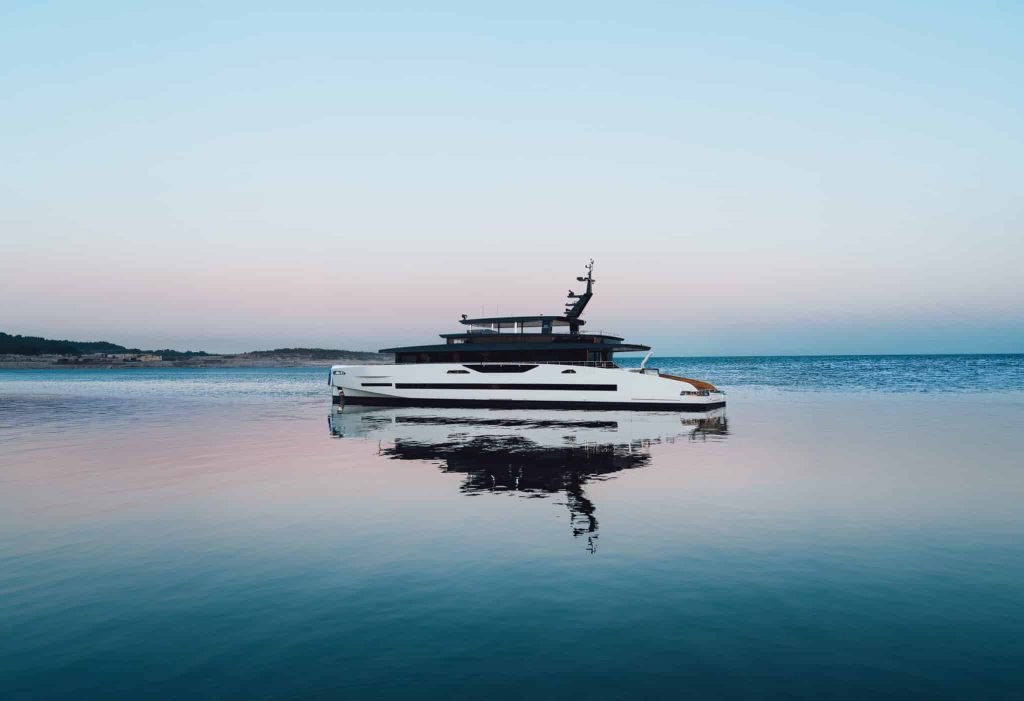
At a more accessible scale, the emergence of hybrid explorer yachts — combining diesel propulsion with electric motors and substantial battery banks — is making expedition-capable vessels available to a broader ownership demographic. GX Superyachts’ GX42, with its solar-electric hybrid system offering one hundred nautical miles of silent electric range, demonstrates that explorer capability and environmental responsibility can coexist.

109m Lürssen Superyacht O3 © BOAT International
The Destinations That Drive the Trend
The explorer yacht’s rise is inseparable from the changing geography of luxury yachting. As the traditional Mediterranean circuit — Côte d’Azur, Sardinia, the Balearics — grows more congested each summer, the most discerning owners are seeking destinations that reward the effort of reaching them.
Norway’s fjords offer landscapes of staggering drama, with anchorages that provide genuine solitude even in peak season. Svalbard, in the high Arctic, combines glacial wilderness with marine wildlife encounters that rank among the most extraordinary natural spectacles on earth. Patagonia, the Galápagos, the remote Indonesian archipelago — these are destinations that demand the kind of vessel that can get there safely, operate independently for extended periods, and return its passengers to civilisation enriched rather than merely entertained.
Purpose as the New Luxury
The explorer yacht revolution reflects a broader shift in luxury values. The most successful individuals of this generation did not earn their wealth through passive inheritance but through active creation — building businesses, solving problems, pursuing ambitious visions. Their approach to leisure reflects this orientation. They want yachts that do something, that go somewhere meaningful, that provide the platform for experiences that cannot be purchased any other way.
This is not anti-luxury. It is luxury recalibrated — luxury defined not by what others can see but by what the owner can experience. A sunset viewed from an anchorage in a Norwegian fjord, with no other vessel in sight and the only sound the call of seabirds, is a luxury that no marina berth in Monaco can provide.
The explorer yacht is the vessel that makes such moments possible. And in 2026, more owners than ever are choosing to pursue them.
Featured photo: © GX Superyachts