
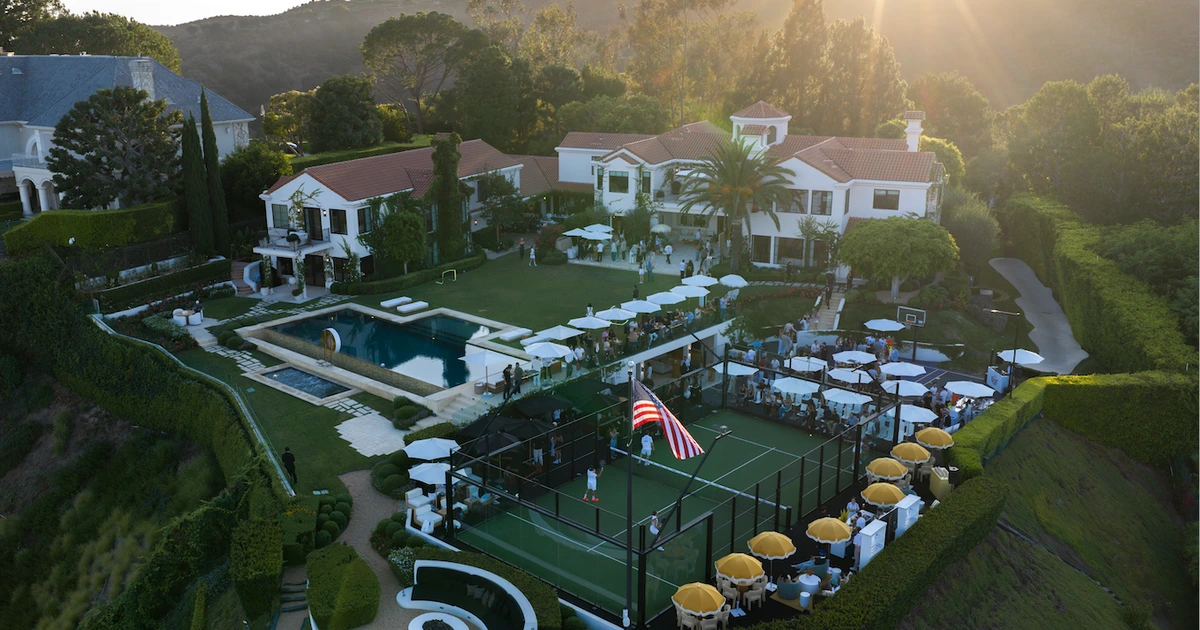
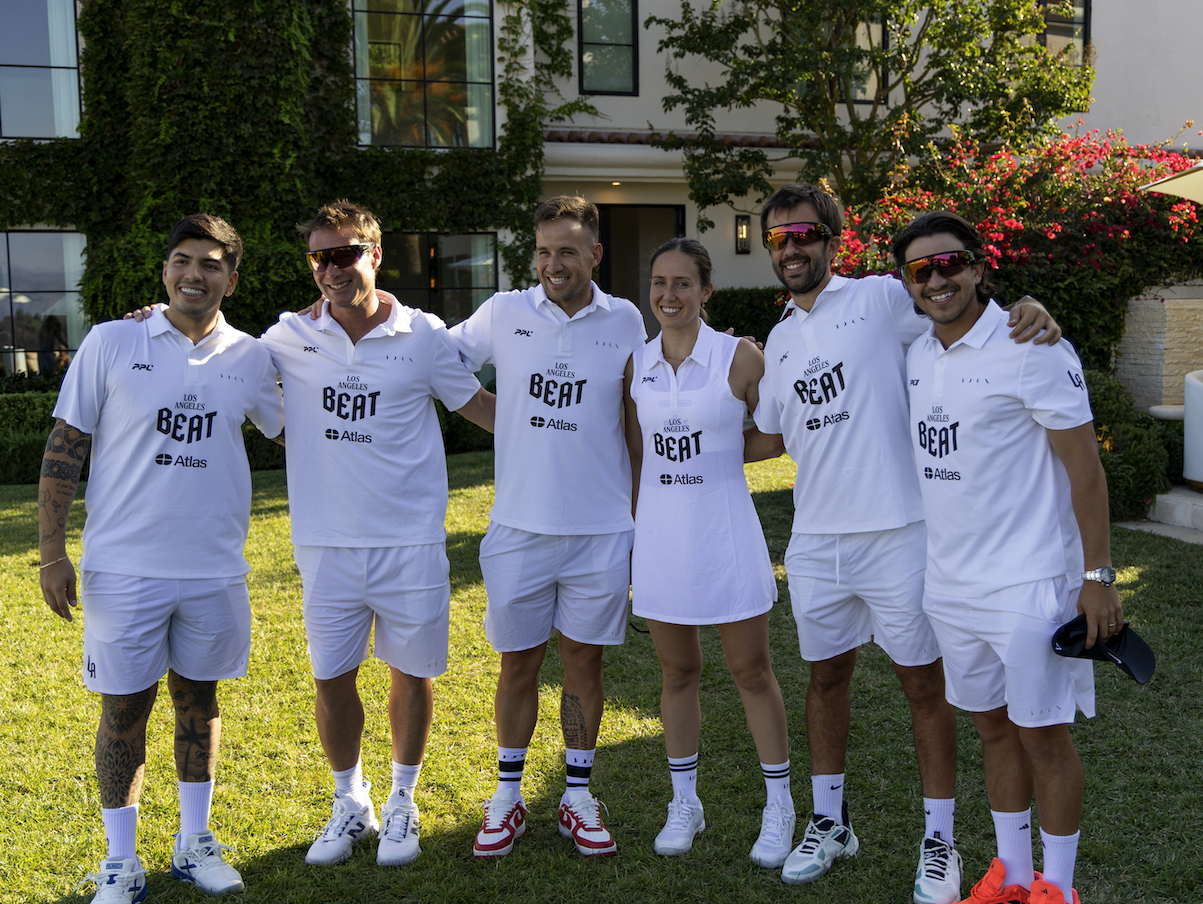
From left, LA Beat players Leonel Aguirre, Jacobo Blanco, Sergio Sanchez Moruno, Julia Polo, Antonio Fernández and Luis Estrada
That growth potential is ultimately what led the Eisen family to invest not only in the team but in the league itself. The opportunity, Corey says, was to acquire the Los Angeles franchise while leading a material investment into the Pro Padel League at a moment when the U.S. market remains relatively undeveloped compared with the sport internationally. Globally, padel has more than 19 million players and 58,000 courts, according to Eisen, compared with roughly one million players and 1,000 courts in the U.S. “The U.S. is where we saw the greatest upside,” he says. “Even a healthy derivative of what padel has become internationally, landing in the largest sports, media, and commercial economy in the world, represents meaningful return potential in my opinion.”
The investment thesis is already attracting brands interested in the experiences being built around the game. “Partnering with the Los Angeles Beat reflects exactly what Atlas Card stands for—meaningful access, innovation, and creating moments that go beyond the expected,” says Atlas Card CEO Patrick Mrozowski. “The Beat is setting a new standard for their sport.”
The game itself is relatively easy to understand. Padel is played primarily as doubles on a glass-enclosed turf court, using solid, stringless rackets and balls similar to tennis balls. Corey’s sister Nicole Eisen, also an owner of the Beat, believes newcomers can begin enjoying it relatively quickly. “I found padel easier to pick up than tennis,” she says. “The rackets are more compact, which gives you a more controlled backswing, and you always have a partner on your side to support you during competitive play.”
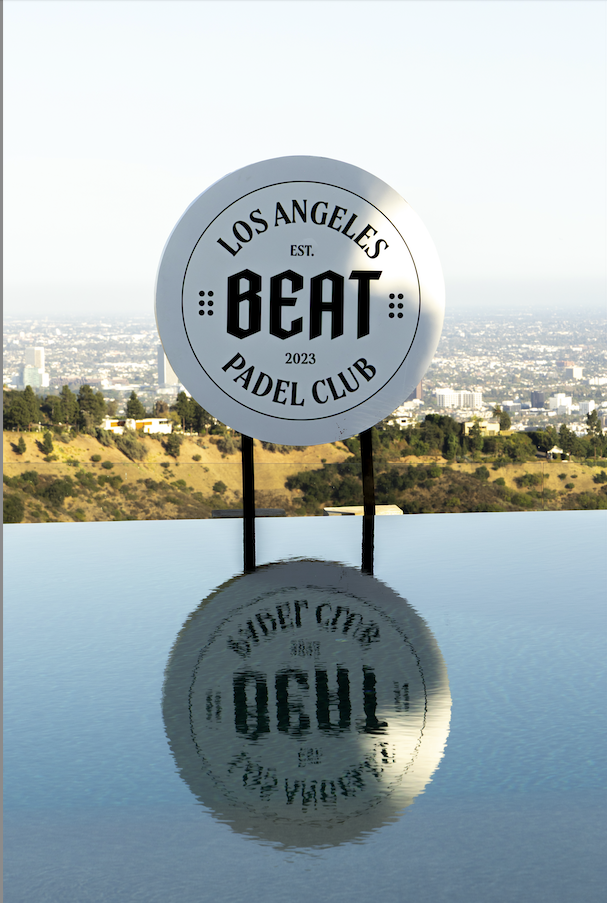
The event’s stunning city views were the perfect backdrop.
Among Tuesday’s guests were Jennifer and Steve Shpilsky, co-founders of Los Angeles Padel Club, which they plan to open later this fall. Steve sees an important distinction between how approachable padel is for a beginner and how it is at its highest level. “The athleticism at the highest levels is just incredible,” he says. “You get really close to the action. You feel like even as a spectator, you’re playing the game.”
Former NFL player and padel investor Tre Boston discovered the game while vacationing with his wife in the Dominican Republic. After trying a nearby court, he encountered a group of Chilean players who showed him how much he still had to learn. He returned home hooked and has since invested across the padel ecosystem, including facilities and professional and amateur leagues.
For Boston, padel provided an outlet he had struggled to find after football. “Padel gave me the chance to be athletic, have agility, have speed, jump, power, everything,” he says. Yet the same court can accommodate dramatically different players. “It’s such a low barrier to entry sport that when you go out there, you have fun ASAP.”
Corey sees padel’s appeal extending well beyond what happens on court. “Padel delivers the same relationship-building golf has always provided, plus a serious workout, in ninety minutes rather than five hours,” he says.
Daniel Wolf, who emceed Tuesday’s match, sees the court itself as a rare equalizer. Padel, he says, creates an “even ground for everyone,” where players can be matched by level and relationships form naturally through play.
For Harleen Kaur, CEO of Bleu Projects, those relationships are part of what makes the sport particularly effective as an event platform. “The most impactful events don’t simply bring people together; they create meaningful relationships that continue long after the final match,” she says. “Padel is the perfect platform for that because it naturally blends sport, business, hospitality, and culture.”
Beginning Thursday, Los Angeles will see the professional game up close when the Pro Padel League makes its debut at Barker Hangar in Santa Monica. From Aug. 13 through 16, 10 teams and more than 40 of the world’s top male and female players will compete, with the championship airing nationally on CNBC. Men and women compete for the same clubs, with results and prize money carrying equal weight.

Gianni Cures checks out the event’s Ferraris.
For LA Beat player Julia Polo, that structure carries significance beyond the court. “As a female athlete, it’s incredibly meaningful to be part of a league like the Pro Padel League, where men and women compete for equal prize money,” she says. “It reflects a genuine commitment to equality and shows that the level of women’s padel and the work we put into our careers are truly valued and respected. It sends a powerful message to the next generation of female athletes that their achievements are valued equally, and I’m proud to be part of a league that is helping set that standard.”
“The Pro Padel League couldn’t be more excited to bring the highest level of professional padel to the Los Angeles audience for the first time,” says PPL CEO Michael Dorfman. He sees this week as an opportunity for the ownership group, its partners and players to “help us set the stage for an incredible tournament week ahead at Barker Hangar in Santa Monica.”
Beginning Thursday, padel moves onto a much larger Los Angeles stage at Barker Hangar, with four days of competition featuring some of the best players in the world. The setting may be different, but what made Tuesday night so compelling will still be at its center: a fast, athletic game that is as much fun to watch as it is to play socially. For a sport rapidly expanding its footprint in the U.S., Los Angeles feels like a natural place for what comes next.
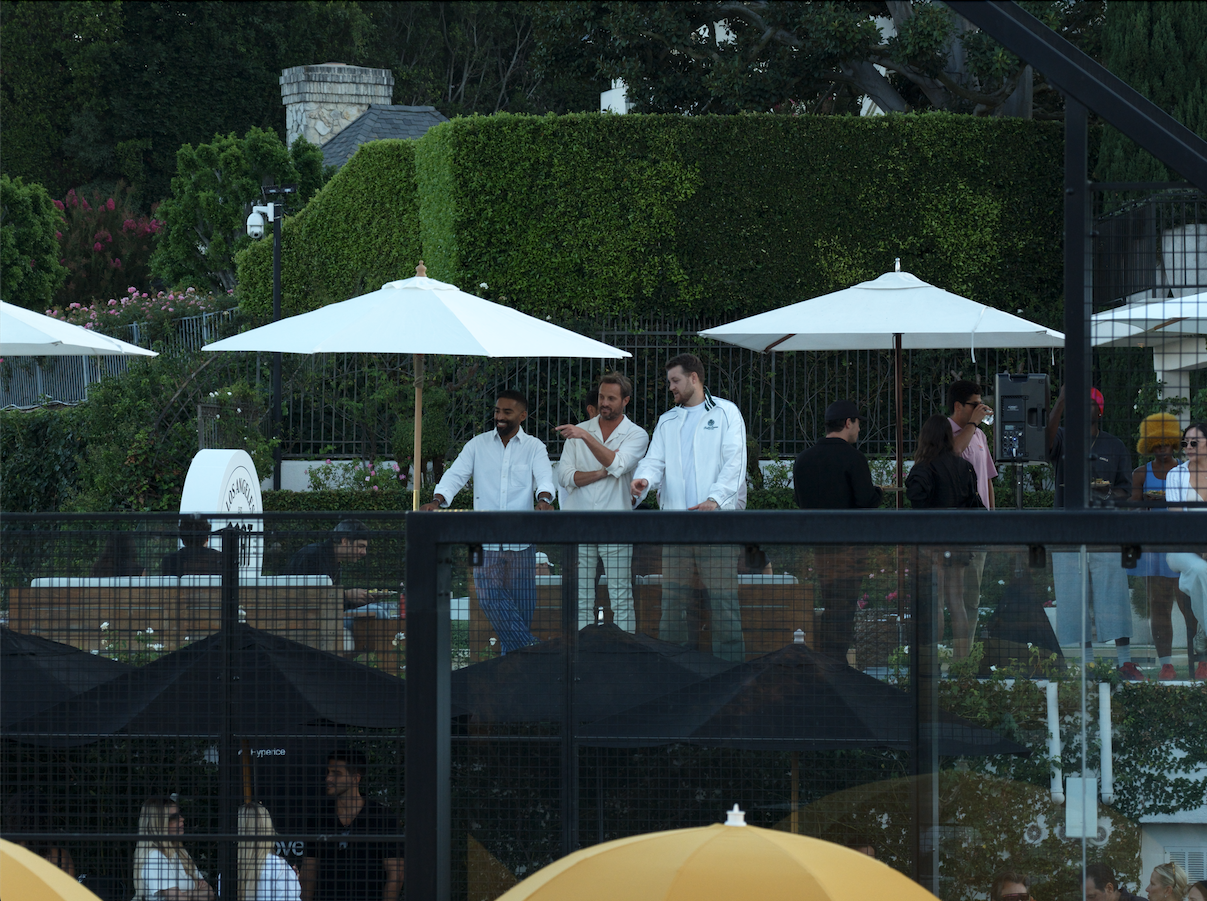
Saadboy, Romaine Pave and Drew Kirsch watch the match from above.
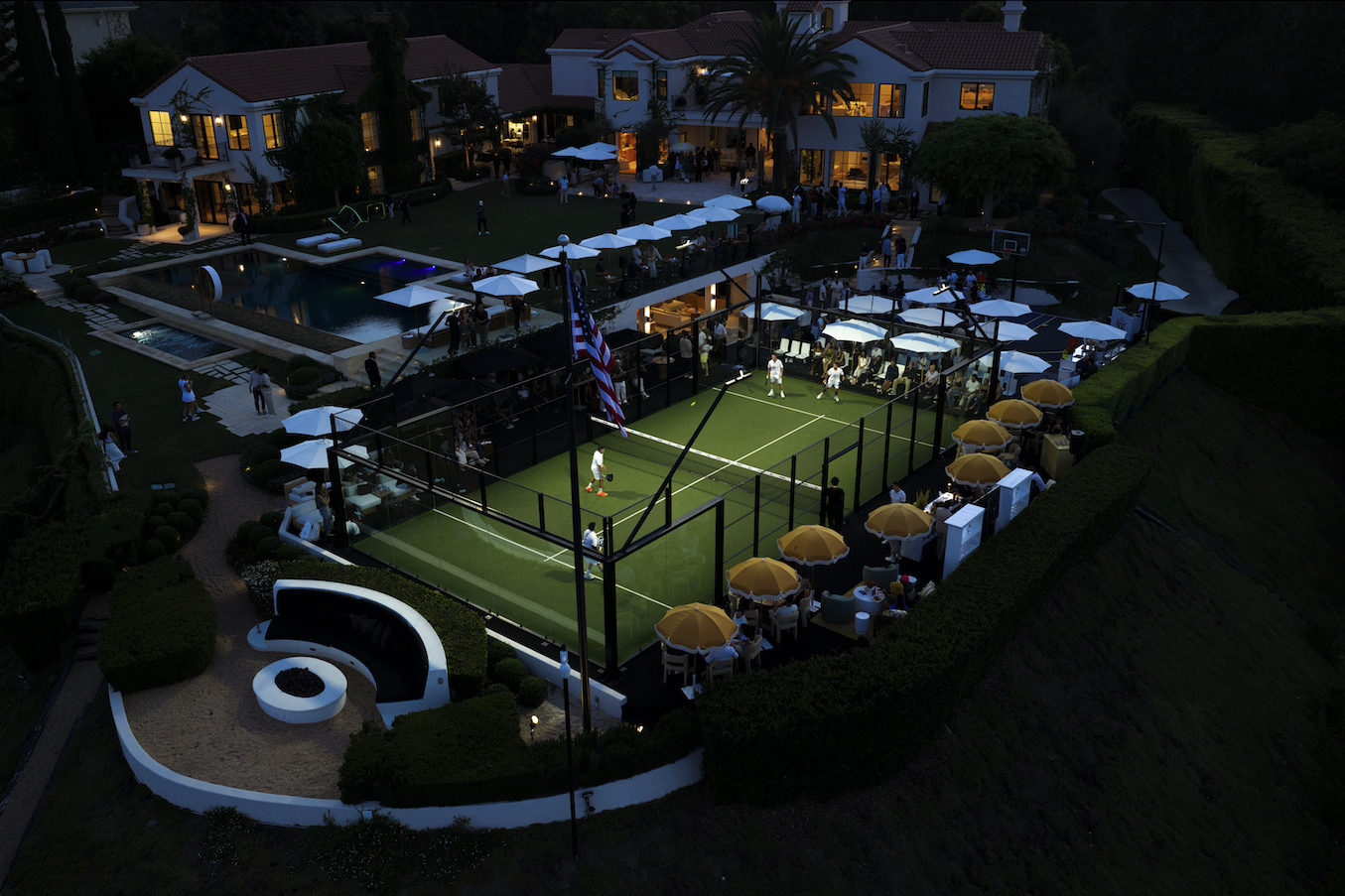
The match took place as the sun set.