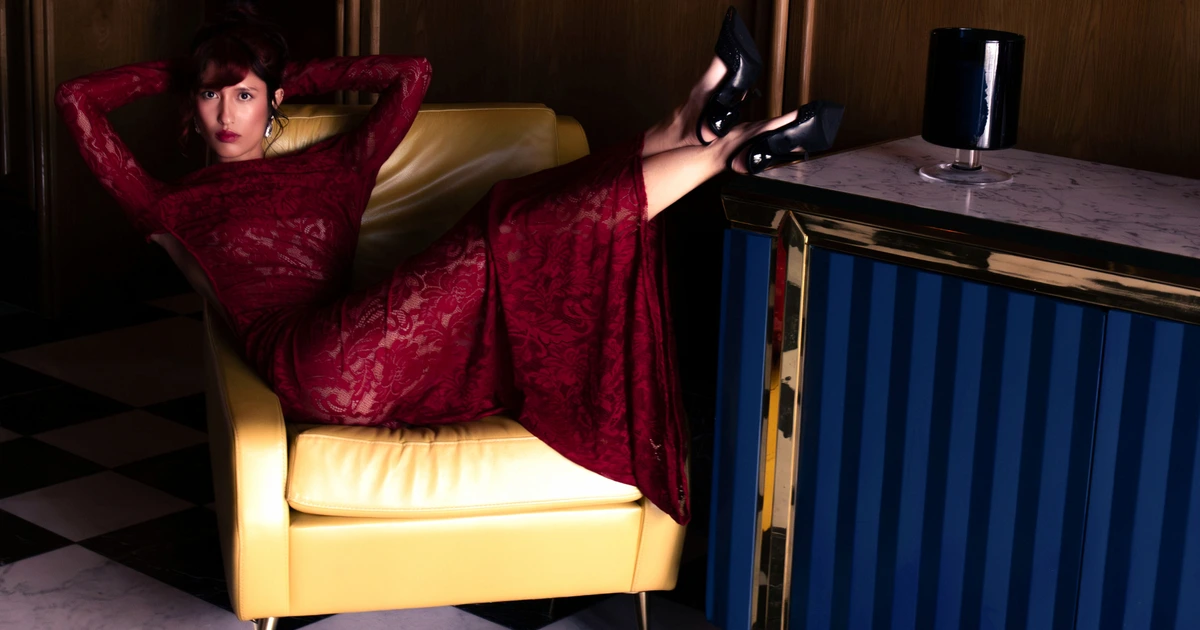
She started with designers she already knew, including Miami-based labels Aqua Intima, VLACKBOOK and Dream of Desire. The network has since grown to include designers from Korea, Morocco and Bulgaria. “I’m also looking for a clear point of view,” she says. “I want to understand what they’re trying to say through their work and see that reflected in the product.”
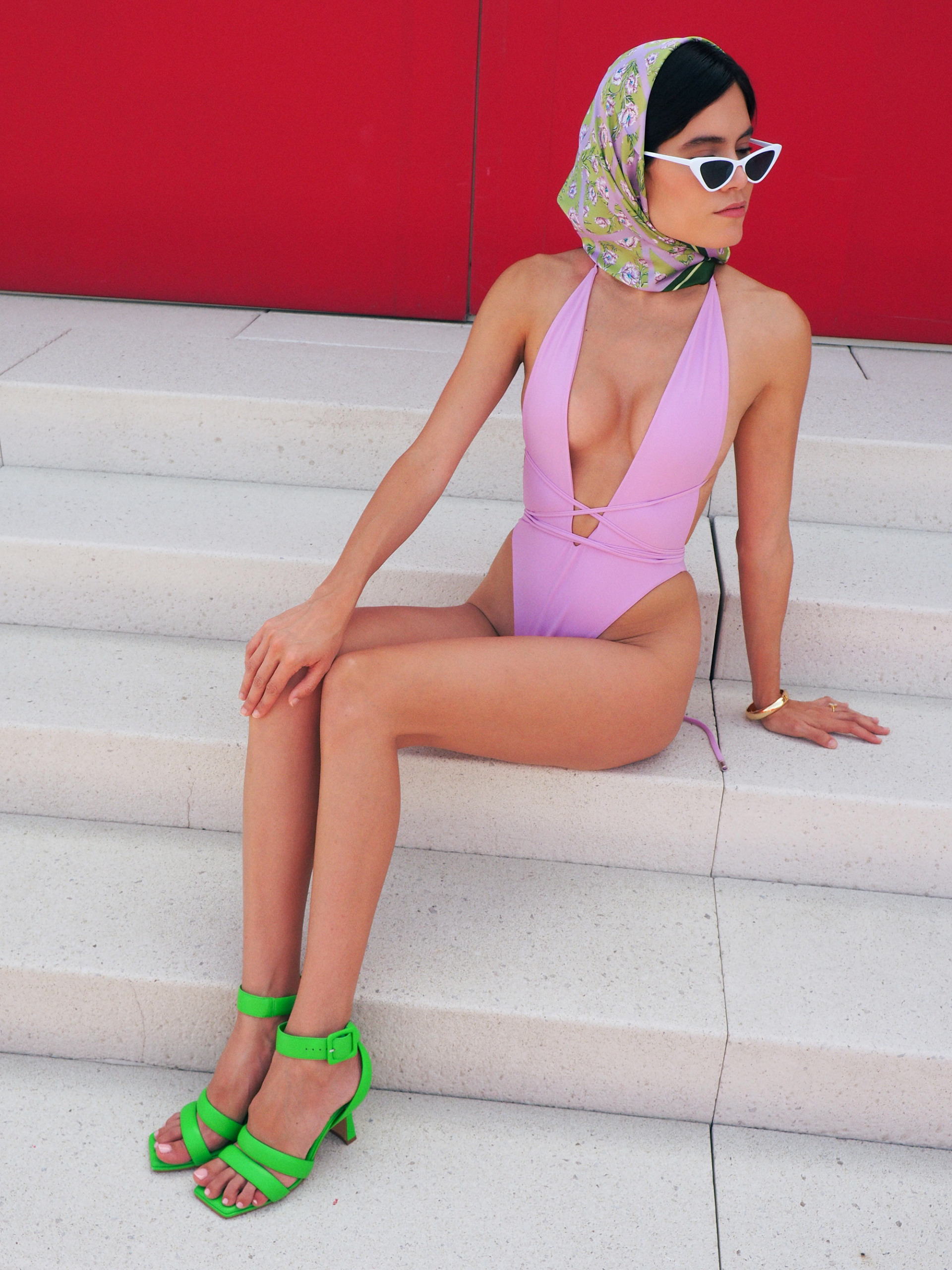
Designer Paola Diaz in swimwear by Aqua Intima. Photography by Lara Tomenchok
The three Miami designers illustrate the range within that standard. Aqua Intima was shown during Miami Swim Week. VLACKBOOK presented a World Cup collection during Florida Men’s Fashion Week. Dream of Desire has built a following through pop-ups around Miami Art Basel.
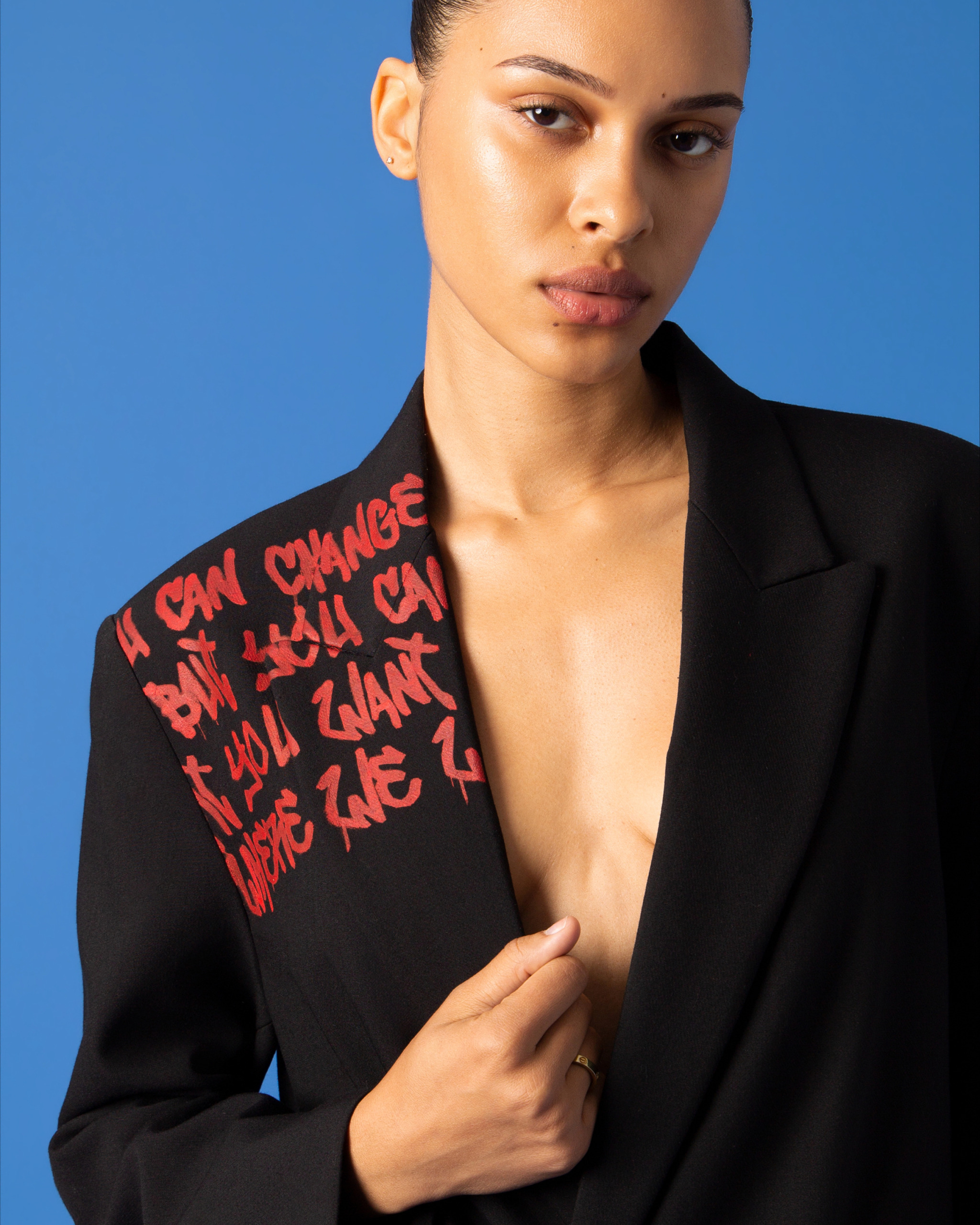
Painted Blazer by Dream of Desire. Photography by Thibo Villeneuve
Each draws on the culture of the same city and arrives somewhere entirely different, which is precisely the point. “I’m not looking for one Indie Identity aesthetic,” Tomenchok notes. “I’m looking for designers with a distinct point of view and something original to say through clothing.”
That philosophy extends into the platform’s defining concept: Style Identities, a framework built to go beyond conventional aesthetic categories rather than reinforce them. Designers as different as the ones she was assembling could make an edit feel disjointed unless there was some other way to hold it together.
The solution was not a shared look, but archetypes flexible enough to hold contradiction, since, as Tomenchok put it, “most women I know aren’t one aesthetic.” Someone can be, in her words, “an Outfit Repeater on Monday and a Fashion Daredevil by Friday.”
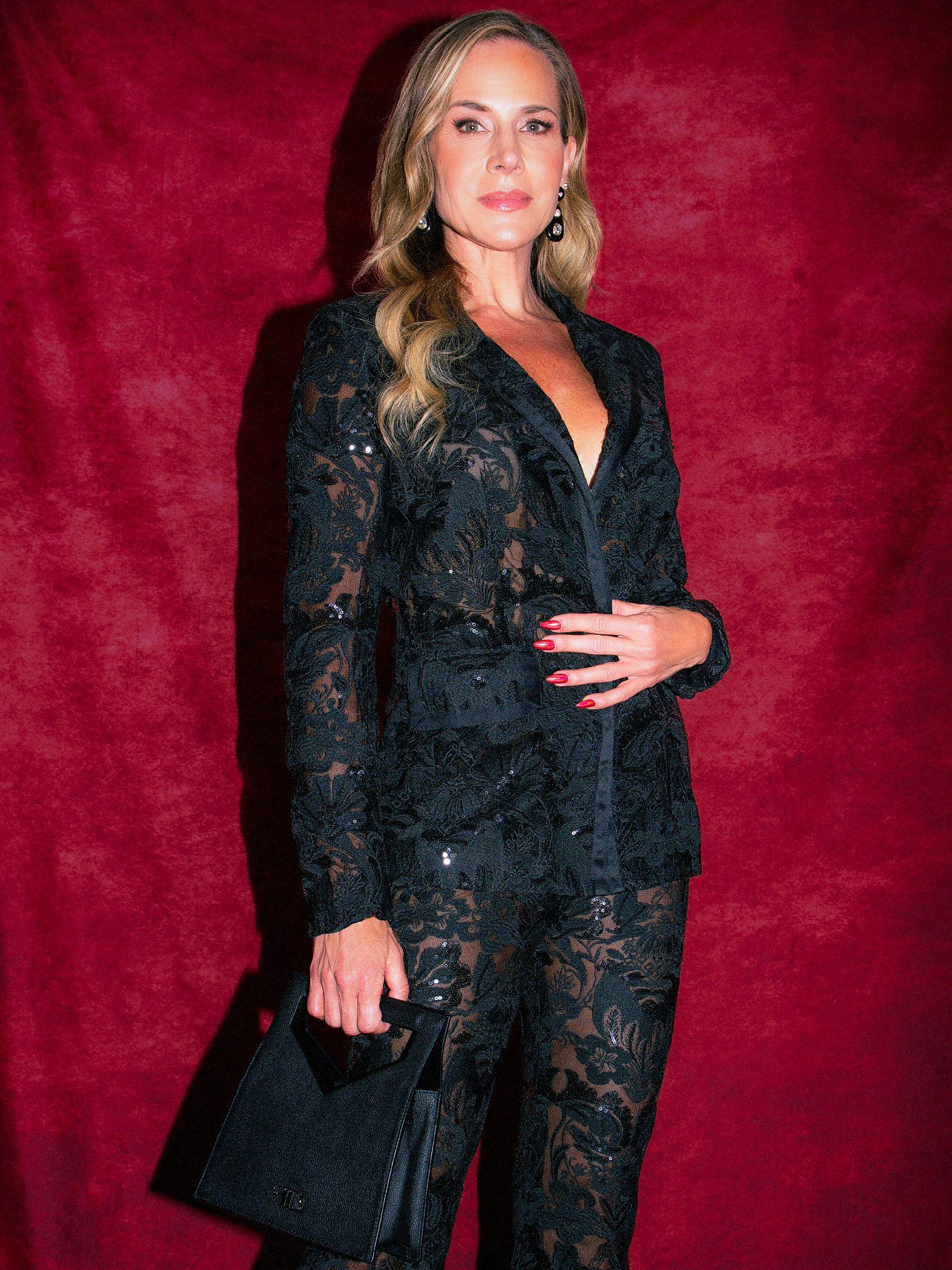
Julie Benz in Guzundstraus Suit and Furthest Death Hand Bag. Photography by Thibo Villeneuve
The concept is already moving off the platform and into editorial storytelling, most notably through an upcoming project with actress Julie Benz and music artist Terror Jr., built around Benz’s film Horrified. The two selected independent designer looks without being told which Style Identities they aligned with, and each gravitated naturally toward different archetypes, The Fashion Daredevil and The Main Character.
For Tomenchok, that was confirmation of the concept’s premise. “The identity doesn’t define the person,” she says. “The person gives the identity her own meaning.”
As Indie Identity grows, Tomenchok envisions shopping, discovery and storytelling becoming more tightly woven together, each reinforcing the others rather than functioning as separate features.
“Shopping will always be at the heart of Indie Identity, but discovery is what makes it interesting,” she says. She hopes the platform makes shoppers feel “a little more curious,” both about their own style and about the designers behind the clothes they choose to keep.