
Christmas markets are easy to reproduce. Their history is not.
Strasbourg’s Christkindelsmärik dates to 1570, placing it among the oldest Christmas markets in Europe. The tradition has changed locations and grown across the city over the centuries, but its roots remain distinctly Alsatian. Long before Strasbourg began calling itself the Capital of Christmas, people were gathering here to buy seasonal food, crafts, toys and Christmas trees. That history still shapes the experience today.
Christmas in Strasbourg Since 1570
The historic Christkindelsmärik is centred on Place Broglie, while another traditional market surrounds Strasbourg Cathedral, spreading across Place de la Cathédrale, Place du Château and the surrounding streets.
This is where the city makes most sense on foot. Bredle, gingerbread, mulled wine and Alsatian specialities appear among the stalls, while the half-timbered streets of the historic centre provide a setting that needs remarkably little seasonal invention.
Where you stay matters. Hôtel Cathédrale sits directly opposite Notre-Dame Cathedral, placing guests at the centre of the old city and within steps of the surrounding Christmas market. In December, that location changes the nature of the stay. The market becomes part of the day rather than an attraction visited for an hour before returning elsewhere.
Nuremberg offers another version of the same continuity. Its Christkindlesmarkt is one of Germany’s oldest, with the earliest confirmed written evidence now dated to 1678. The market still occupies the Hauptmarkt in the old city, its wooden stalls filled with traditional decorations, Nuremberg gingerbread, bratwurst and the city’s distinctive gold-foil Rauschgoldengel.
The details are local enough that the market could not easily belong anywhere else.
Vienna Does It Differently
Vienna’s great advantage is scale. The Christkindlmarkt at Rathausplatz opens on 13 November in 2026, with Vienna City Hall behind it and around 3,000 square metres of ice running through the illuminated Rathauspark. Elsewhere, Christmas markets appear at Schönbrunn Palace, Belvedere, Spittelberg, Freyung and Am Hof.
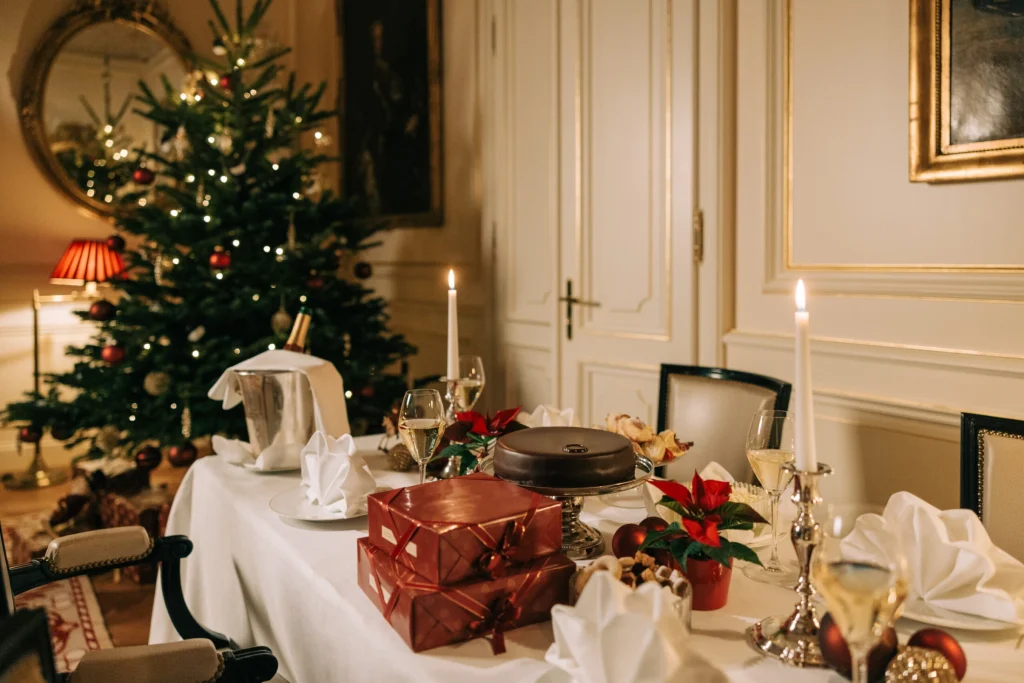
A stay at Hotel Sacher Vienna places much of that Vienna within walking distance. The hotel stands opposite the Vienna State Opera, close to the Ringstrasse and the historic centre. After a day outside, there is also the Original Sacher-Torte, made according to the hotel’s closely guarded recipe since 1832.
That combination of city, hotel and season is what makes Vienna particularly convincing in December. Christmas is layered onto places that already have histories of their own.

Why the Old Markets Still Matter
The strongest Christmas markets retain a sense of place. In Strasbourg, that means Alsatian food and a tradition stretching back to the Reformation. In Nuremberg, gingerbread, bratwurst and the Christkind belong to the city’s own Christmas culture. Vienna brings imperial architecture, cafés and a network of markets spread through the historic centre.
For a December city break, choosing a hotel within walking distance of one of these markets does more than save a taxi ride. It allows the city to be experienced before the crowds arrive in the morning and after many day visitors have left at night. The lights and mulled wine may be what bring people there. The history is what makes it worth travelling for.
Featured photo: © Hotel Sacher Vienna