
For most of the past century, progress meant removing the human hand from the process. Machines made things faster, more precise and easier to reproduce. Now artificial intelligence can generate in seconds what once took hours to conceive.
At almost exactly the same moment, something very old is becoming valuable again. A shoe shaped over a wooden last. A suit cut for one body. A watch component finished in a place its owner may never see. Embroidery that takes days rather than minutes. None of this is particularly efficient. That may increasingly be the point.
The Things That Take Time
A pair of bespoke Berluti shoes can take between 50 and 60 hours to make. A wooden last is hand-carved for the client’s foot, followed months later by a fitting pair that the shoemaker can cut open to locate pressure points and adjust the shape to the millimetre.
There are faster ways to make an excellent shoe. What those hours buy is the judgement of someone who knows when a millimetre matters.

© Berluti
Fine watchmaking offers an even quieter version of the same idea. Craftspeople finish components that may spend most of their existence hidden inside a case. The owner may rarely see the work. Everyone else almost certainly will not.
Much of modern luxury is designed to be recognised. This kind requires nobody else to know.
The Little Shop in Rome
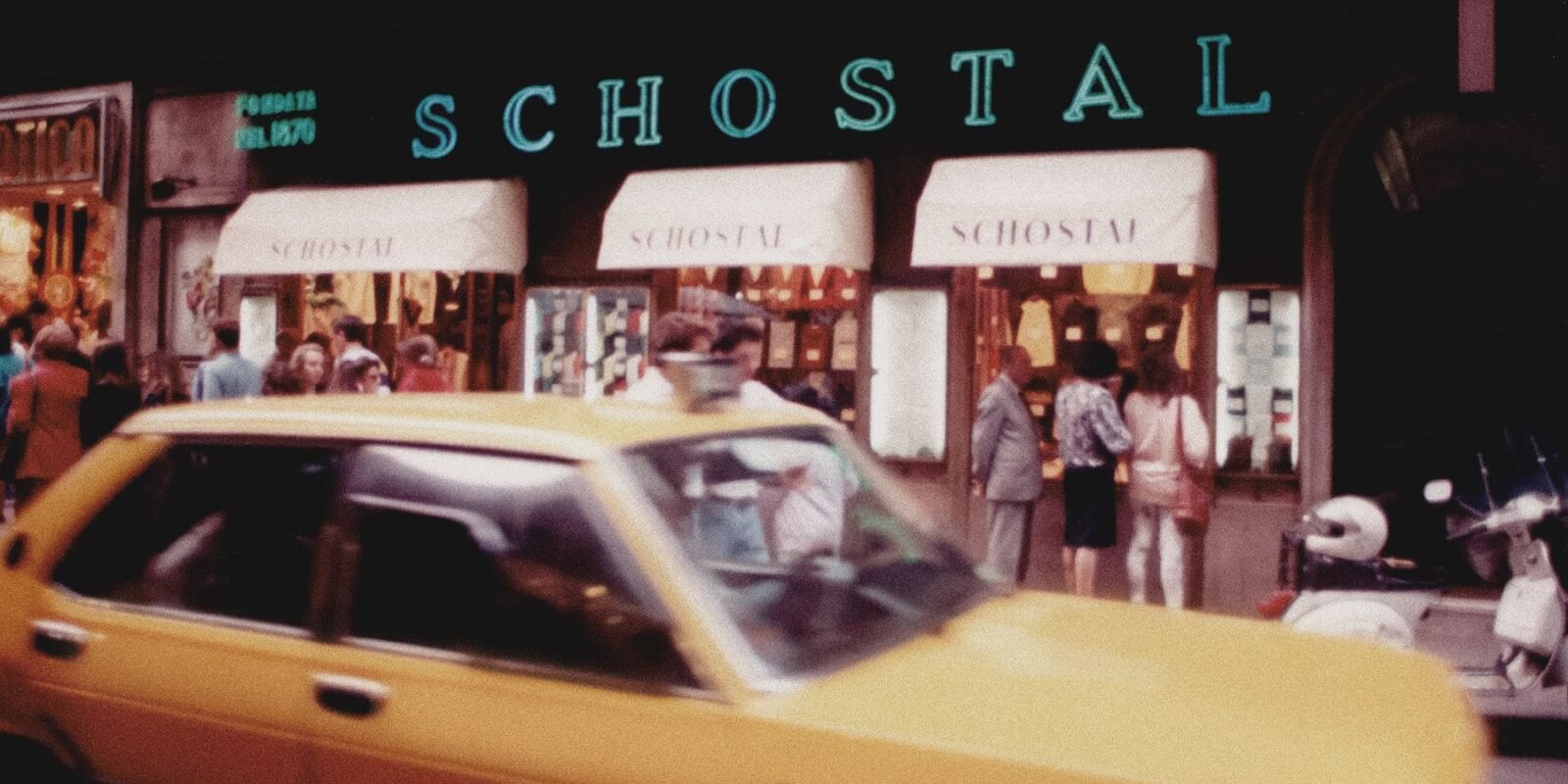
Perhaps the more revealing example is a small shop in Rome. Schostal Originals has been part of the city since 1870. Its shop on Via della Fontanella di Borghese specialises in pyjamas, socks and knitwear, the sort of things traditional European haberdashers sold long before they became luxury discoveries.

© Schostal Originals
Today, people travel to Rome looking for it. Among those who have found their way to Schostal are Zendaya and Harry Styles, while Wes Anderson is such a devotee that he has dressed actors in Schostal pieces. Sofia Coppola, Gwyneth Paltrow, Anne Hathaway and many others have also shopped there. The Times recently documented the extraordinary new following surrounding this tiny Roman shop.
What people are queuing for is strikingly ordinary. Cotton pyjamas. Schostal’s bestselling cotton-voile pyjamas come with hand-finished details. There is no prominent logo and little to announce their provenance. Unless someone knows Schostal, they are simply very good pyjamas. And perhaps that explains why Schostal has found an audience among people who could buy almost anything. Here, knowing has become more interesting than showing.
What Handmade Actually Means
The renewed interest in craftsmanship has made handmade a useful word to put beside an expensive object. On its own, however, it tells us very little.
A garment can be largely machine-made and finished by hand. Another may require dozens of manual processes. A machine-made object is not inherently inferior, just as something handmade is not automatically exceptional. The better question is what the human hand contributed.
A shoemaker shapes a last because feet are not identical. A tailor adjusts a pattern because bodies are not either. A stone setter responds to the particular stone in front of them. The value is not simply in the hand. It is in what the hand knows. And that knowledge has to be passed on. Traditional craftsmanship depends on skills moving from one generation to the next, often through years of observation and practice.

© Berluti
The Luxury We Almost Forgot
This distinction matters more as replication becomes easier. Factories can produce thousands of near-identical objects. Software can generate thousands of variations before a craftsman has finished the first prototype. There is no reason to romanticise inefficiency. Technology has made extraordinary quality available to more people and continues to improve what craftspeople themselves can do.
But abundance changes what feels scarce. For decades, luxury became increasingly associated with price, access and recognisable symbols. Those things have not disappeared. Yet there is a different pleasure in an object whose value is difficult to communicate across a room: the construction of a shoe, the finishing inside a watch, the cut of a jacket or the feel of cotton from a Roman shop that has been selling it for generations.
Craftsmanship is not a new luxury. It is one of luxury’s oldest values, returning at a time when we are beginning to understand its worth again.
Featured photo: © Schostal Originals