
You have probably seen these words without registering them: sleepmaxxing, looksmaxxing, gymmaxxing… Sometime in the last two years, the internet decided that any activity could be turned into a project by adding one suffix, and the suffix was “-maxxing.” Most of it is a joke. Drinking lemon water in the morning became “lemon-water-maxxing.” Getting eight hours of sleep became a discipline with a name. Then the word reached the property market, and it stopped being funny.
Where the Word Actually Comes From
The suffix has a stranger history than its TikTok ubiquity suggests. It began in 1940s game theory, in the mathematics of “min-maxing,” maximising one variable while minimising another. It passed through tabletop role-playing games, where a “min-maxer” pours every resource into a single strength. And in the 2010s it was picked up in some of the internet’s least pleasant corners, the incel forums, where “looksmaxxing” meant optimising one’s physical appearance, before TikTok stripped it of that context and handed it to everyone.
By the spring of 2026, it had gone fully mainstream. One measure: the New York Times used “looksmaxxing” thirty times in the first half of this year, compared to six times in all of 2025. The Pentagon tweeted about “lethalitymaxxing.” Conan O’Brien joked about “host-maxxing” at the Oscars. When a piece of slang travels from an anonymous forum to the podium of the Academy Awards in under a decade, it has stopped being a trend and become part of the language.
The Version That Costs a Billion Dollars
Which brings us to real estate, and to a term coined not by teenagers but by Coldwell Banker in its 2026 Mid-Year Report: landmaxxing.
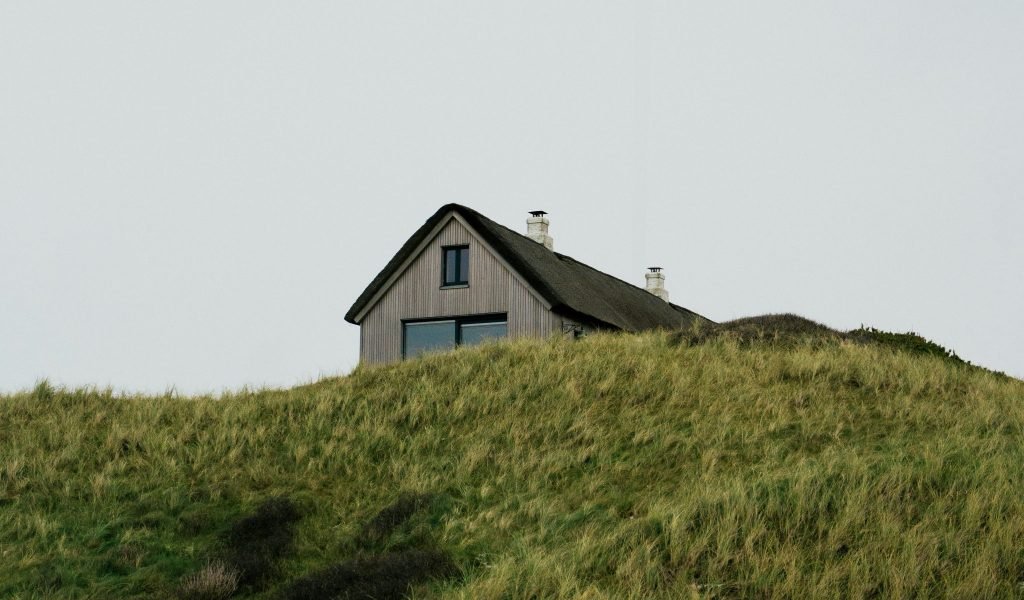
The definition is simple. Rather than buying a bigger house, the very wealthy are buying the houses next to theirs. And the ones behind. And the empty lot across the road. The goal is not more square footage inside. It is control over everything outside: the view, the silence, the certainty that no one will ever build, watch, or arrive uninvited.
The numbers behind it are real. According to Coldwell Banker, US searches for buildable land rose 97% year over year in the first five months of 2026, while searches for unique properties, estates, castles, historic homes, private islands, climbed 146%. Sixty-three per cent of luxury agents reported a jump in all-cash deals.
And the names attached to it are not hypothetical. Ken Griffin, the Citadel founder, has spent more than a billion dollars assembling land between Miami and Palm Beach, including over 450 million on a single 27-acre compound. Jeff Bezos has poured more than 230 million into neighbouring properties in Indian Creek Village, the Miami enclave known as the Billionaire Bunker. Perhaps the most telling example is the smallest: a member of the family behind Jack Daniel’s bought a 14-acre ranch in Colorado, then spent another 1.2 million on forty adjacent acres for no reason other than to protect the view of the mountains.
Why a Joke Word Fits a Serious Trend
Here is the part worth sitting with. The reason “landmaxxing” works, the reason it stuck, is that it is accidentally accurate.
The whole logic of “-maxxing” is the optimisation of a single variable at the expense of everything else. That is exactly what these buyers are doing. They are not maximising comfort, or size, or even beauty. They are maximising one thing: the absence of other people. The empty lot is not an asset because of what can be built on it. It is an asset because nothing will be.
This connects to something we have written about before. Whether it is the wealthy redrawing the map of where they live, paying to skip the airport terminal entirely, or buying into branded residences for the privacy they promise, the pattern is consistent. At the very top of the market, luxury has quietly stopped being about acquiring more and started being about removing everything unwanted, the crowd, the noise, the neighbour, the possibility of being seen.
So Is It Just an Internet Trend?
Whether the word itself lasts is a fair question. Writing in Psychology Today this summer, one observer compared “-maxxing” to suffixes like “-ville” (squaresville, dullsville) and “-palooza,” which ruled for a season and now sound dated, and pointed out that there is almost always a simpler way to say the same thing.
But the behaviour underneath “landmaxxing” is not going anywhere, whatever it ends up being called. Land is the one luxury that cannot be manufactured, and privacy is the one that cannot be bought back once it is gone. The word may fade. The billionaires quietly buying their neighbours’ houses will not.