
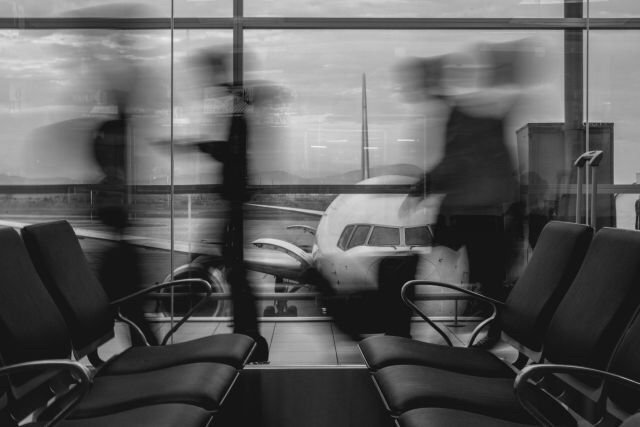
For decades, the ultimate flex in air travel was owning the plane. That has quietly changed. Some of the wealthiest travellers now want something a private jet can’t give them: the ability to fly commercial, in a normal seat, without ever touching the airport itself. In July 2026, San Francisco International Airport announced it wants to build them a place to do exactly that.
SFO is taking bids to build a private terminal off North Access Road, a completely separate facility with its own TSA screening, its own customs and immigration lines, a lounge, and a chauffeured car that drives you across the tarmac to the door of your commercial aircraft. Bids are due by October 7, the lease is expected to be awarded in December, and the earliest opening is late 2028.
What You’re Actually Paying For
The concept isn’t new, and it isn’t even American in origin. It’s modelled on a facility at London’s Heathrow, with cousins in Dubai, Zurich and Munich. In the United States it has a name, PS, formerly The Private Suite, which opened the first terminal of its kind at LAX in 2017, built for $22 million at no cost to the airport or taxpayers.
The premise is simple: you’re still flying commercial, still in the same cabin as everyone else, but everything before you board is engineered to remove the parts of air travel people dread. PS estimates a typical LAX passenger takes around 2,200 steps from car seat to plane seat. For those who pay, it’s about 70. Guests are met on a gated driveway, screened privately rather than in a public queue, and wait in an individual suite with a daybed, a stocked pantry and their own bathroom. There’s champagne and caviar on arrival, and members can book a haircut, a massage, or a doctor to meet them at the suite. When it’s time to fly, a BMW carries them across the runway.
None of it is cheap. A single visit to a PS suite at LAX runs around $4,350, or $3,250 for members; the shared salon option is $695 per person. At the newer Atlanta location, suites reach $4,850. SFO’s consultant estimated the eventual San Francisco price would fall between $800 and $1,800 per use. More than 1,200 memberships have already been sold across the network, which tells you the demand is real.
The Company Behind the Curtain
There’s a telling detail in who built all this. PS is owned by Gavin de Becker & Associates, a Los Angeles security firm that has spent decades protecting high-profile clients, John Travolta, Madonna and Cher among the names associated with it. The private terminal didn’t start as a hospitality idea. It grew out of the logistics of keeping well-known people away from crowds, cameras and unpredictability, and luxury was the byproduct.
That origin explains the specific kind of comfort on offer. This isn’t a nicer chair or a better glass of wine, which airlines have sold for years. It’s the removal of exposure altogether: no paparazzi, no crowds, no strangers, no queue. Privacy, not opulence, is the actual product.
The Bigger Picture
The SFO announcement matters not because a handful of billionaires will use it, but because of what it signals. As one reader put it when the news broke, it’s another example of something people once took for granted being turned into a luxury for the wealthy. Moving through an airport with a degree of calm used to be ordinary. Increasingly, it carries a price tag. And it’s happening from both directions at once. As private terminals spread, ordinary lounge access is tightening: a wave of restrictions hit the major networks in early 2026, adding spending thresholds and capacity caps just as the premium tier pulled further ahead. The middle is being squeezed from both sides.
PS wants a terminal at every major US airport by 2030, and SFO is pursuing this precisely as Bay Area wealth surges on the AI boom. The old dividing line in air travel ran between those who flew private and everyone else. The new one is quieter, and more revealing: between the people who experience the airport at all, and the people who pay, handsomely, to pretend it isn’t there.
Featured photo: © Pinterest