
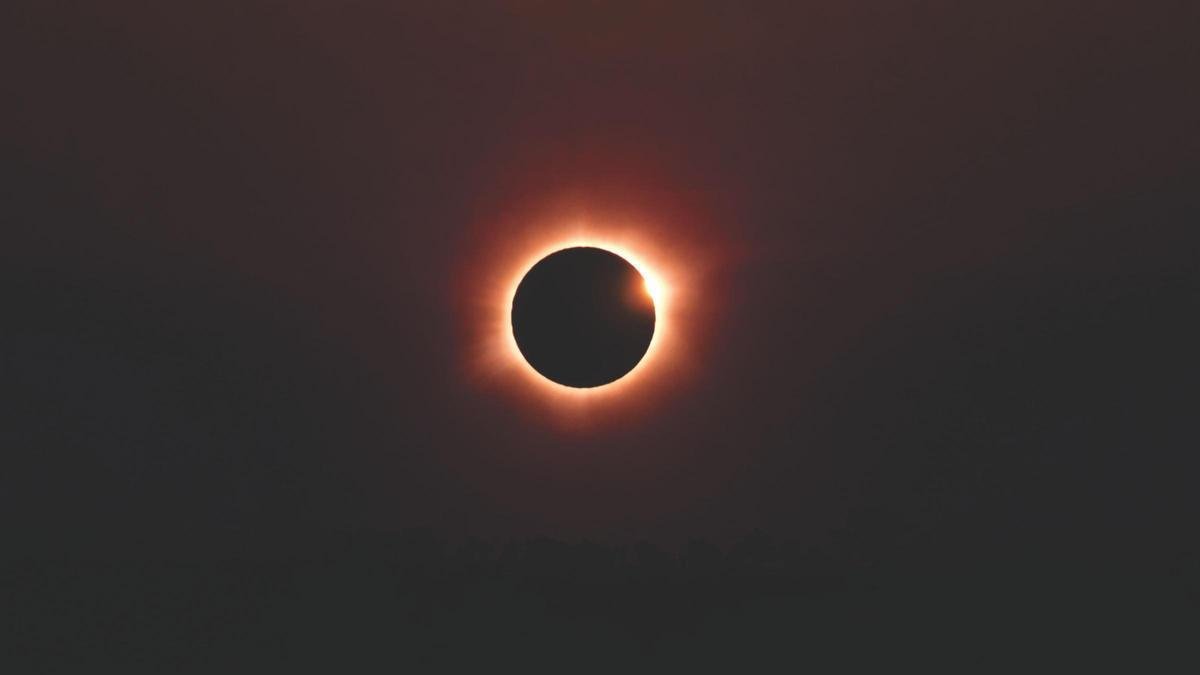
Ibiza is preparing for an extraordinary evening in the Mediterranean sky. On Wednesday, 12 August 2026, the island will experience a total solar eclipse, with the Moon completely covering the Sun for a brief period shortly before sunset.
For travellers lucky enough to be in Ibiza or neighbouring Formentera, it could become one of the defining moments of summer 2026.
There is, however, one factor that no astronomer can control: the weather.
With the eclipse now approaching, attention is turning from astronomical calculations to cloud forecasts. The early outlook from Spain’s State Meteorological Agency, AEMET, is relatively encouraging, although some cloud is possible during the second half of the day.
That means the prospects are promising, but anyone hoping to see totality should keep checking the latest forecast and choose a location with an exceptionally clear view towards the western horizon.
Will the solar eclipse be visible from Ibiza?
Yes. Ibiza lies within the path of totality for the total solar eclipse of 12 August 2026.
According to Spain’s Instituto Geográfico Nacional (IGN), the eclipse will be total across the Balearic Islands and a large area of Spain. The Balearics are among the last places in Spain to experience the phenomenon as the Moon’s shadow moves eastwards.
In Ibiza Town, the partial phase is calculated to begin at approximately 19:39 local time.
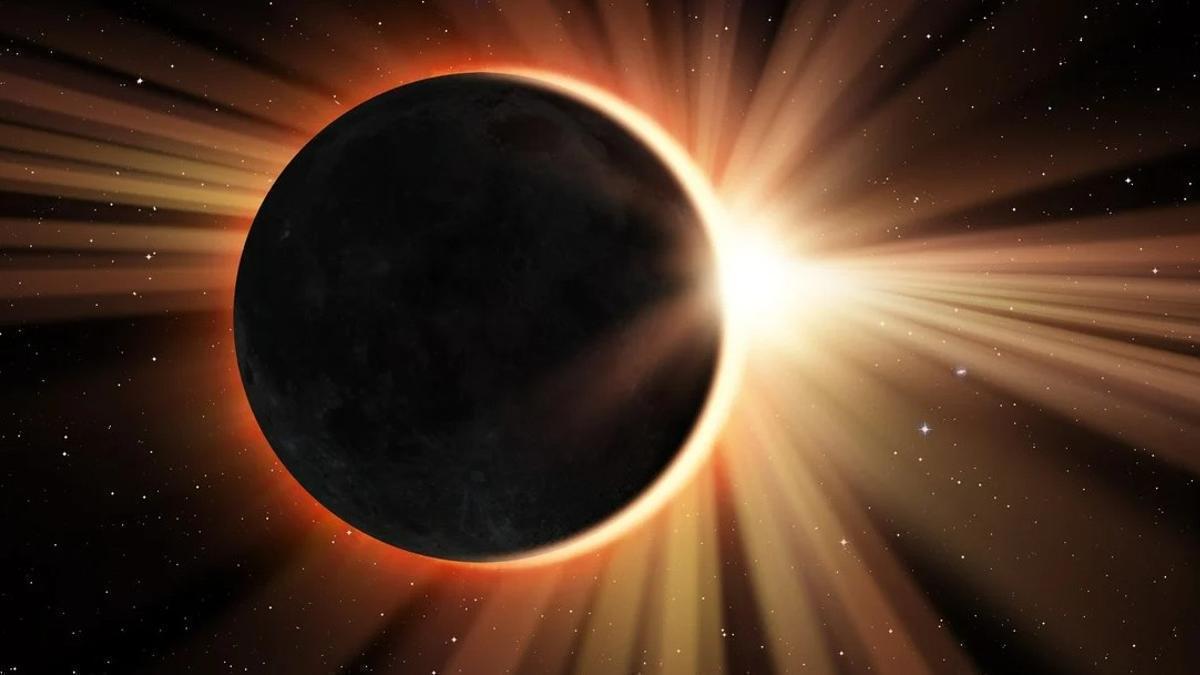
Eclipses allow us to analyze the ionosphere, a layer of the atmosphere located more than 80 kilometers high. / EPC
Totality begins at approximately 20:32:40, with maximum eclipse at around 20:33:12. Totality ends at approximately 20:33:44.
That gives Ibiza Town just over one minute of totality.
The spectacle will take place shortly before sunset. According to IGN calculations, the Sun will be only around three degrees above the horizon at maximum eclipse.
That low solar altitude will make choosing the right observation point particularly important.
What is the weather forecast for Ibiza on 12 August?
The initial weather picture is encouraging.
AEMET’s forecast indicates generally clear conditions during the first part of Wednesday, with partly cloudy or lightly clouded skies later in the day.
The forecast available ahead of the event also indicates a 0% probability of precipitation, although forecasts can change as 12 August approaches.
Temperatures are expected to remain typically hot for August, with values in Ibiza of approximately 24°C to 34°C.
For eclipse watchers, however, temperature and rainfall are secondary concerns. The key question will be exactly where any cloud develops at around 20:30.
A forecast of partly cloudy skies does not mean that the eclipse will be hidden. A few scattered clouds could leave the Sun completely unobstructed.
The problem is that the Sun will be extremely low in the sky.
A cloud bank close to the western horizon could therefore make a much greater difference than clouds located elsewhere over the island.
AEMET has highlighted the 12 August 2026 eclipse in its special weather information, and conditions should be monitored as close to the event as possible.
What about the eclipse in Formentera?
The outlook for Formentera is broadly similar to Ibiza.
The island is also expected to experience hot August conditions, with temperatures of approximately 26°C to 32°C according to the forecast described ahead of the eclipse.
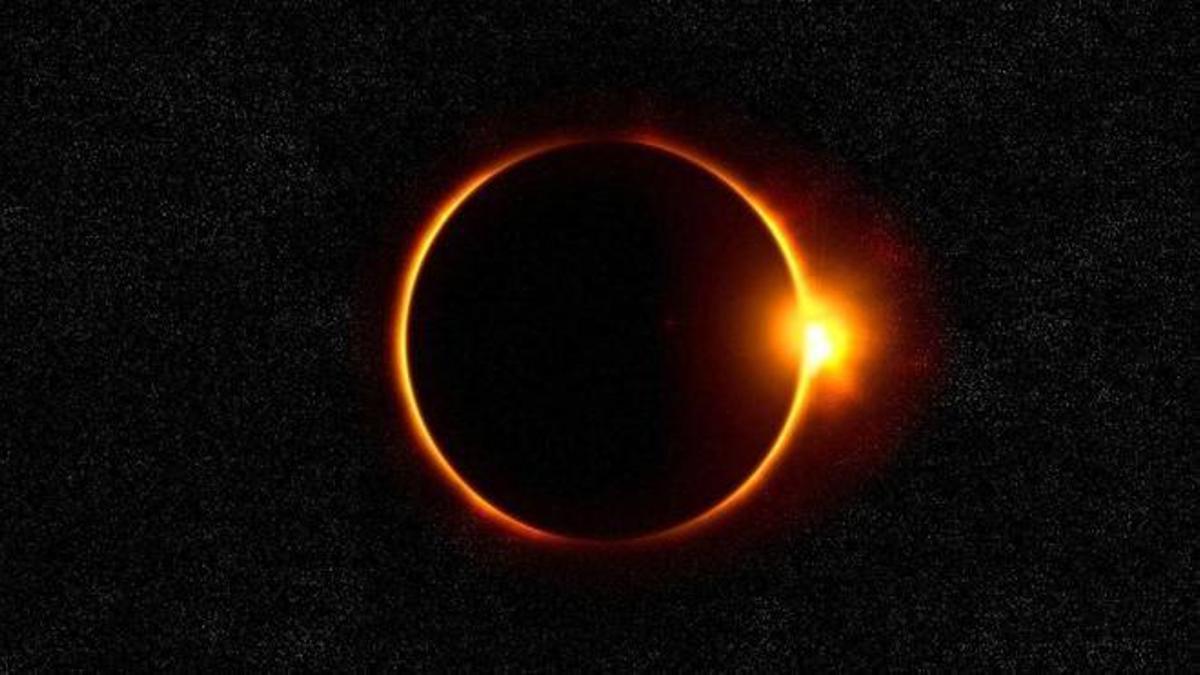
Solar eclipse. / DI
As in Ibiza, the decisive issue will be cloud cover near the horizon during the final part of the evening.
Formentera’s relatively open landscapes could offer excellent opportunities for eclipse watching, provided observers choose a location with an unobstructed view in the correct direction.
Visitors should avoid assuming that any beautiful beach or viewpoint will automatically be suitable. Buildings, cliffs, hills and other landscape features can block a Sun that is only a few degrees above the horizon.
What time is the solar eclipse in Ibiza?
For Ibiza Town, the IGN gives the following official local times for 12 August 2026:
- Partial eclipse begins: 19:39:10
- Totality begins: 20:32:40
- Maximum eclipse: 20:33:12
- Totality ends: 20:33:44
- Sunset: 20:53:00
- Sun altitude at maximum: around 3°
These timings illustrate just how unusual the event will be.
The eclipse starts while Ibiza is still enjoying a bright summer evening. Over the following 50 minutes or so, the Moon will progressively cover the Sun before totality transforms the light shortly after 20:32.
The most dramatic phase lasts only about 64 seconds in Ibiza Town, so this is an event where arriving early really matters.
Why the western horizon matters
For anyone planning to watch the Ibiza solar eclipse, the weather forecast is only half the story.
The other half is geography.
Spain sits near the end of the eclipse’s path, which means totality takes place with the Sun approaching the horizon. The IGN specifically notes that eclipse watchers in Spain will need locations offering good visibility towards the west.
In Ibiza, maximum eclipse occurs with the Sun at an altitude of roughly three degrees.
To visualise that, hold your arm out towards the horizon. Three degrees represents a very small angular distance in the sky.
A nearby hill, hotel, pine-covered headland or even a low bank of cloud could be enough to obstruct the view.
For that reason, an ideal eclipse-watching location should combine a clear western horizon, minimal physical obstructions and enough open space to observe safely.
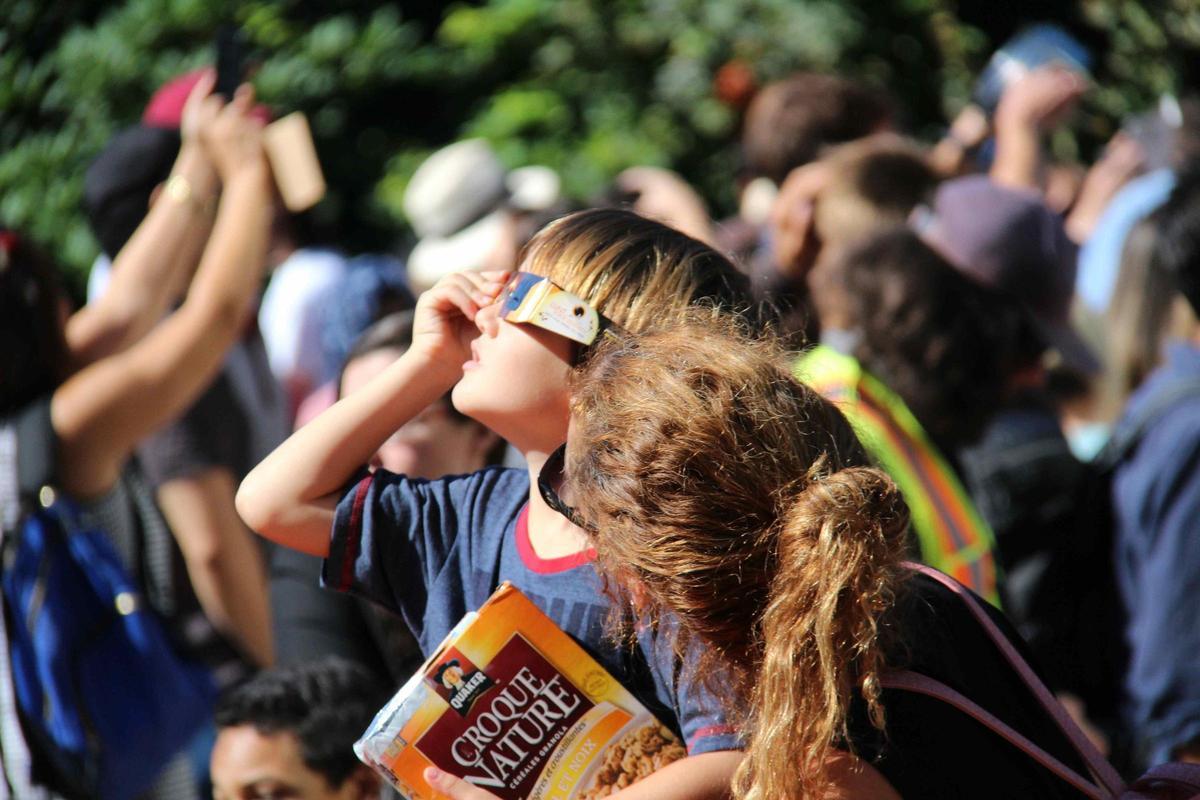
People wearing eclipse glasses. / SITEMINDER
Where should you watch the eclipse in Ibiza?
The most important consideration when choosing where to watch the eclipse in Ibiza is not necessarily finding the island’s most famous sunset location.
It is finding an open view towards the setting Sun.
Western and north-western parts of Ibiza are naturally worth considering because of their sunset-facing geography, but local terrain needs to be checked carefully.
If you are staying elsewhere on the island, plan your journey well in advance. An event of this significance could attract large numbers of residents and visitors to viewpoints, coastal areas and sunset spots.
Allow more travel time than usual and avoid stopping vehicles on roads, verges or other unsafe locations simply to obtain a better view.
It is also worth having a backup viewing location.
Because cloud conditions can vary over relatively short distances, the best place to watch may not become obvious until later on Wednesday.
Check AEMET’s latest forecast before leaving and pay particular attention to conditions along the western horizon.
How to watch the solar eclipse safely
A total solar eclipse is spectacular, but observing it requires appropriate eye protection.
During the partial phases, never look directly at the Sun without suitable solar viewing protection. Ordinary sunglasses are not designed for direct solar observation, regardless of how dark they appear.
Use eclipse viewers or glasses specifically designed for direct solar observation and follow their instructions carefully.
Cameras, binoculars and telescopes require appropriate solar filters fitted correctly to the equipment. Looking through an optical device at the Sun without a suitable filter can cause serious eye injury.
The exceptional moment is totality, when the Sun’s bright photosphere is completely covered by the Moon. However, because totality in Ibiza lasts only around a minute, observers need to be particularly careful as the bright Sun reappears.
Anyone unfamiliar with eclipse observation should review official safety guidance before the event rather than improvising on the day.
Why the 2026 eclipse is so special
The total solar eclipse of 12 August 2026 is much bigger than an Ibiza summer attraction.
The path of totality crosses areas including the Arctic, Greenland and Iceland before reaching Spain. According to the IGN, it will cross Spain from west to east, with totality visible across large parts of the country and the Balearic Islands.
The maximum duration of totality anywhere along the eclipse path will be approximately two minutes and 18 seconds, occurring near Iceland.
In Ibiza, the duration is shorter because the island sits close to the eastern end of the path.
For visitors already planning an Ibiza holiday, Wednesday 12 August should be marked firmly on the calendar.
Frequently Asked Questions
Is the 12 August 2026 eclipse total in Ibiza?
Yes. Ibiza is within the path of totality. In Ibiza Town, totality begins at approximately 20:32:40 and ends at around 20:33:44, according to calculations published by Spain’s Instituto Geográfico Nacional.
What time does the solar eclipse start in Ibiza?
The partial phase begins in Ibiza Town at approximately 19:39 local time on Wednesday, 12 August 2026. Maximum eclipse occurs at approximately 20:33.
How long will totality last in Ibiza?
In Ibiza Town, totality is calculated to last approximately 64 seconds, from around 20:32:40 to 20:33:44. Exact timings vary slightly according to your position on the island.
Will clouds spoil the Ibiza eclipse?
It is too early to guarantee completely clear conditions. The forecast ahead of the event indicates some cloud may develop during the second half of the day, but partly cloudy conditions do not necessarily mean the Sun will be obscured. The location of any cloud around 20:30 will be crucial.
Will it rain in Ibiza during the eclipse?
The forecast described ahead of the event gives a 0% probability of precipitation for Wednesday, although weather forecasts can change. Visitors should check AEMET again on 12 August for the latest information.
Can you see the eclipse from Formentera?
Yes. Formentera will also be exceptionally well placed for the eclipse. As in Ibiza, observers should prioritise an open view towards the western horizon and check the latest cloud forecast before choosing their viewing location.
Do I need eclipse glasses in Ibiza?
Yes, during the partial phases you need proper solar viewing protection to look directly at the Sun. Normal sunglasses are not sufficient. Appropriate solar filters are also required for cameras, binoculars and telescopes.
Can I watch the eclipse from an Ibiza beach?
Potentially, yes, but the beach needs an unobstructed view towards the Sun. Because the Sun will be only a few degrees above the horizon at maximum eclipse, local terrain and buildings can easily block the spectacle. Check the orientation of your chosen location beforehand.
For now, the answer is cautiously optimistic.
The current weather picture does not suggest widespread rain, and the forecast points towards clear conditions earlier in the day followed by relatively limited cloud.
But the Ibiza solar eclipse of 12 August 2026 will take place extremely close to the horizon. That makes even relatively small changes in cloud position significant.
The smartest approach is therefore to prepare for the astronomical event while remaining flexible about the exact viewing location.
Check the latest AEMET forecast on Wednesday, choose somewhere with an unobstructed western horizon, arrive early and bring certified solar viewing protection.
If the weather cooperates, Ibiza and Formentera are about to witness one of the most memorable sunsets of a generation.