
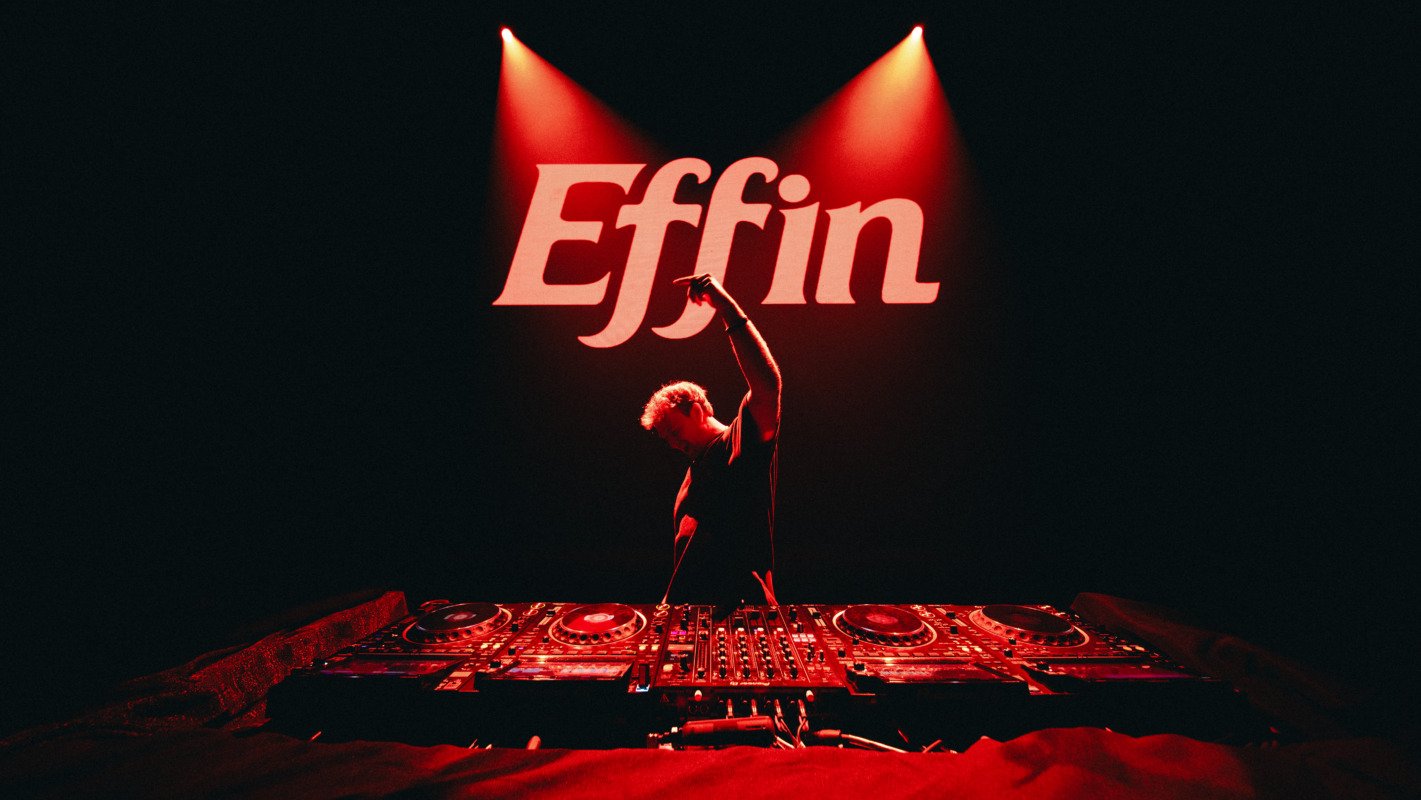
For Effin inspiration can strike just about anywhere. It might come from an ’80s playlist at the gym, a decades-old vocal discovered down a YouTube rabbit hole, or the energy of the city he is preparing to play in that night. Over the years, the producer has developed a sound that pulls from across generations, transforming familiar melodies, riffs, and vocals into something distinctly his own.
After first gaining traction through his SoundCloud flips, Effin has continued refining his artistry, leaning further into the vintage and retro influences that have become central to his music. Now based in Nashville, he is finding new inspiration in the city’s rich musical history while bringing elements of the past into the world of contemporary bass music.
Liana: Your project has evolved significantly since your early SoundCloud flip days. How would you describe your identity as an artist today?
Effin: It’s been a long project in the making, especially if you were here from the early days and the SoundCloud flip days. I feel like I’ve really kind of found my sound, as cheesy as that is. I’ve figured out this lane that I really enjoy.
I always used to tease little bits of vintage and retro elements in some of the older songs I’d worked on, but especially in the past few years, I kind of wear my heart on my sleeve, and it’s all out there. It’s about finding songs that I love and repurposing them into 2026, or whatever you want to call it, and taking my favorite inspirations, riffs, little melodies, and vocals and bringing them 60 or sometimes 70 years into the future and giving them a new life. That’s where I feel like the project exists right now.
Liana: Sampling and reimagining older music have become such an important part of your sound. What usually catches your ear when you’re searching for inspiration?
Effin: A lot of times I’ll be at the gym and I’ll put on an ’80s playlist or ’90s New York hip-hop and hear something and think, “That vocal is insane.” Then I’ll go home and start picking that apart.
It can also come from going down a Spotify or YouTube rabbit hole. Honestly, anywhere I can find inspiration. Sometimes it’s just finding one single sound, and that ends up starting the track.
I usually start from bar one at the intro and build out the world of the song. I love the idea of world-building. You usually see that in my songs with just one or two words, honestly. I pull from a lot of different eras and a lot of different worlds and try to make all of those themes fit into one three-and-a-half-minute song.
Liana: You recently moved to Nashville. Has being surrounded by such a historically rich music city influenced your artistry?
Effin: Nashville is amazing. It has such a rich history—not just with country music, but pop music and especially background vocal work.
A lot of the newer stuff I’m working on draws from ’50s and ’60s country artists who worked in Nashville, including people who may have been background singers and then had their own covers or smaller projects. One of the new songs I’m working on has a vocal replay from the Anita Kerr Singers, who were a Nashville pop harmony background chorus group. It’s cool to use something from 70 years ago and repurpose it now. It almost feels like a full-circle moment.
Liana: Your sets feel incredibly intentional and often include references that are specific to where you’re playing. What does your creative process look like when building a set?
Effin: The first thing I try to do, especially if it’s a themed set or a specific moment, is really dive into that theme.
For sunrise at Bonnaroo, I had half of the set be about the actual sun. I started with “Here Comes the Sun” by The Beatles and did a fun flip of that. Tonight in New York, I was thinking, “Okay, I’ve got to throw in an Action Bronson vocal. I’ve got to throw in some Wu-Tang vocals.” You sometimes hear those influences in my songs. I had to throw in some Beastie Boys, of course.
I love finding little moments that I feel like the crowd will pick up on and think, “That’s so unique to this moment.” On top of playing the songs that people know me for, I sprinkle in edits and new music that I’m working on. My music is kind of a collage, and I want my sets to feel like a collage too. Full of all these fun little moments curated toward whatever city or event I’m playing.
Liana: Looking at the bass music landscape right now, what are you most excited about? Are there any directions you feel the genre is moving toward?
Effin: Bass music is in a crazy place right now, as it probably will continue to be forever. I feel like it’s a constant pendulum swinging back and forth between really heavy and then really vibey, and then going back into more production-focused styles.
I also think people want to see more songwriting, more themes, and more curated sets where their artistry is on display, and not just a bunch of mashups.
Liana: You’ve had an incredibly busy year between playing festivals, touring, and working on new music. How do you protect your creativity and find a balance between everything?
Effin: This year has been a lot, but I’ve been so lucky. I think I’ve played something like 25 festivals, on top of tour runs and my own shows, while also working on some of my biggest projects.
It’s a constant battle because just when you think you’re getting into the swing of things, suddenly it’s, “We need to work on the set for this weekend,” and then I have to leave for the next three days. It’s hard to get the balance perfect.
I try to keep a balance where the show days are just for the shows, and the music days at home are just for the music. I write when I’m at home, play-test those songs on the weekends, and then go back and revise them.
Liana: You’ve already had the opportunity to play some major stages this year. Is there a dream venue or festival that remains at the top of your list?
Effin: A dream venue for me has got to be Red Rocks. I got to play it for the first time this year as support, and that was the one where I told my parents and they were like, “Oh, this is real.”
I think everyone over the age of 50 has this idea of EDM where it’s like, “Oh, you’re going into a dark room and playing for a bunch of hippies.” But Red Rocks was the one where my parents told all their friends and brought their friends out. That’s the one where they were like, “Wow, he’s the real deal.”
It’s always been such a legendary venue in the scene, and it would be an honor to hopefully headline it one day.
As he balances a packed touring schedule, Effin remains focused on the details that make his music and live sets feel personal, from decades-old vocals brought into the present to city-specific references woven into his sets. Together, these elements form a world that feels distinctly his own.
Effin’s approach to his career follows a similar philosophy. His sound continues to evolve, without losing sight of the influences that got him here.