
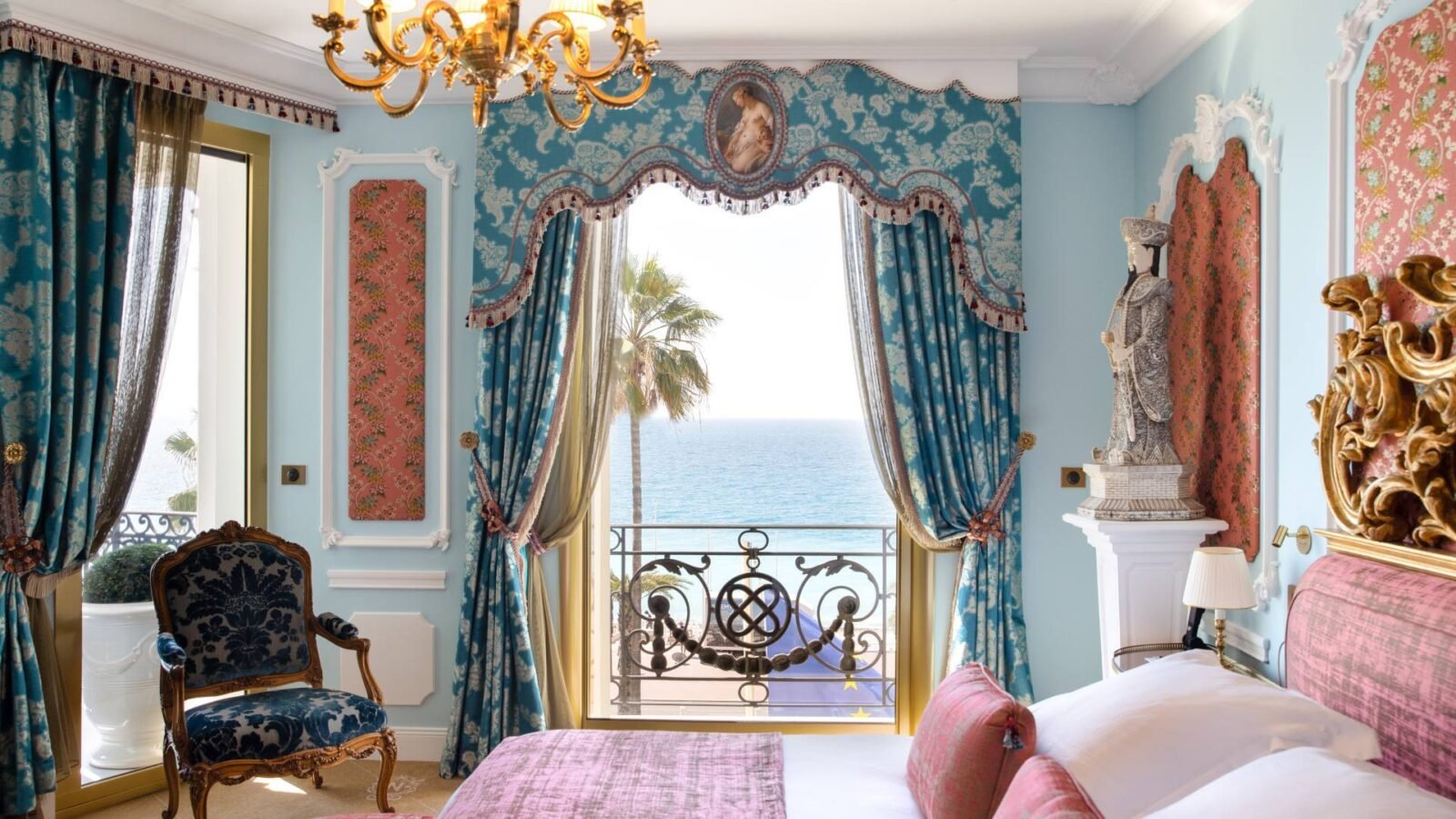
A Signature Suite at Le Negresco, Nice.
Some hotels are addresses. A very few are institutions — the kind of place that does not merely accommodate a city’s visitors but safeguards its idea of itself. On the Promenade des Anglais, facing the blue arc of the Baie des Anges, Le Negresco has held that position since January 1913. What began as one Romanian maître d’hôtel’s improbable ambition has become something rarer than a grand hotel: a living, inhabited chapter of French art de vivre, and one of the last fully independent five-star houses in France.
Belle Époque, Built to Last
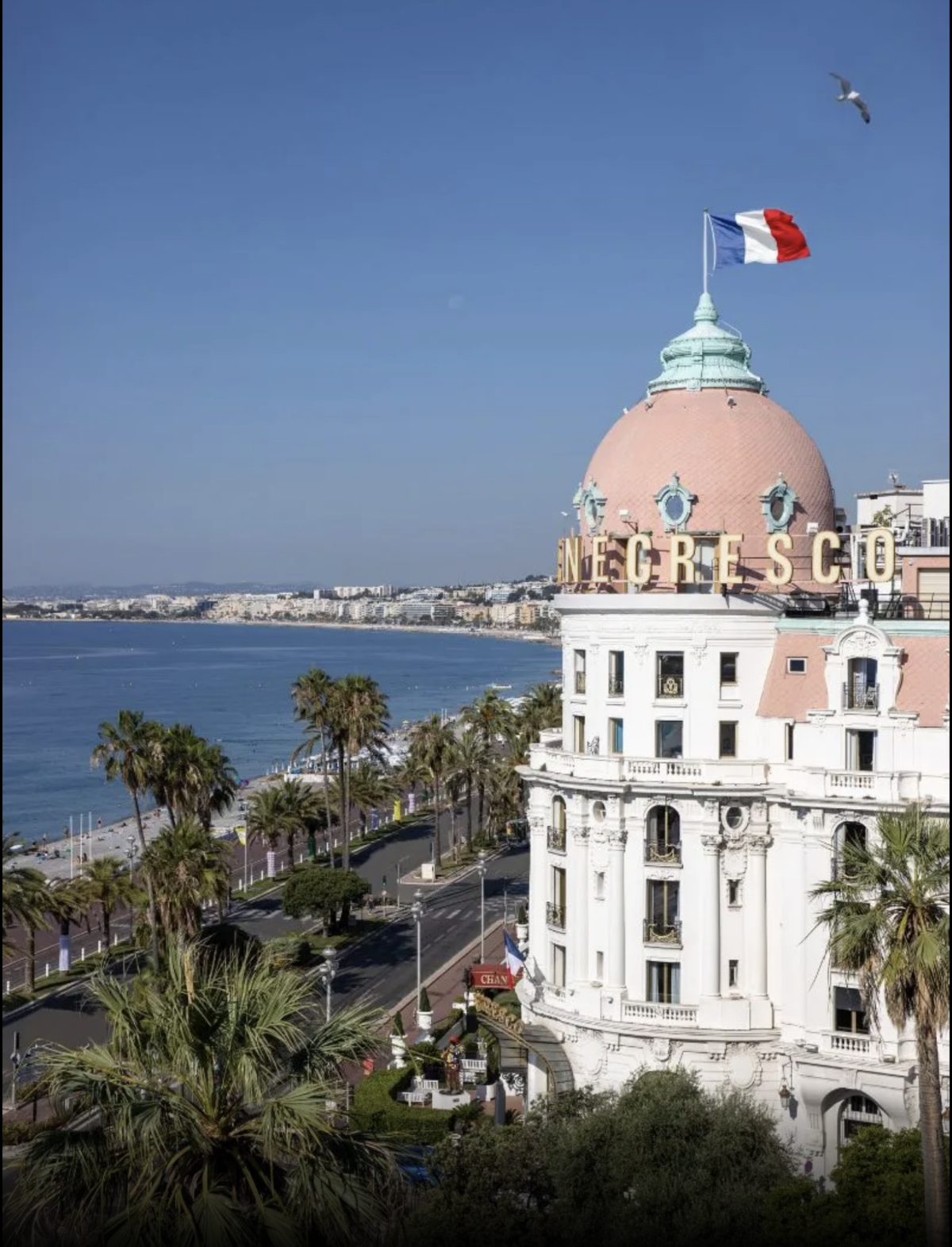
Henri Negresco’s vision arrived at exactly the right moment. Nice was then the winter capital of European aristocracy, and he wanted a hotel that would not simply host the Riviera’s golden age but embody it. He commissioned architect Édouard-Jean Niermans — the man behind the Moulin Rouge and the Hôtel du Palais in Biarritz — and the result opened its doors on January 4, 1913: a white palace crowned by a rose-pink dome that has since become shorthand for Nice itself. More than a century later, that silhouette remains one of the great architectural signatures of the Mediterranean coast, a standing dialogue between Belle Époque grandeur and the particular light of the Côte d’Azur. In 2003, France made the relationship official, classifying the building’s façades and roofs — along with its central salon — as Monuments Historiques.
A Museum That Happens to Have Rooms
What truly distinguishes Le Negresco is what happened after the architecture. When Jeanne Augier’s family acquired the hotel in 1957, she began a project that would occupy the rest of her life: assembling an art collection of nearly 6,000 works and objets d’art, and then — crucially — refusing to cordon any of it off. The result is a house where a Hyacinthe Rigaud portrait of Louis XIV hangs as a matter of course, where Niki de Saint Phalle’s exuberant Nanas punctuate the corridors, where Vasarely gouaches and a deep archive of René Gruau posters share walls with Empire furniture and 1970s design. Art here is not curated behind glass; it is lived alongside — encountered on the way to breakfast, glimpsed from a staircase, absorbed almost peripherally. Culture and hospitality become inseparable, a philosophy the hotel articulates in its own reflections on art through the ages, the Jeanne Augier Collection, and its guiding manifesto. Augier’s endowment fund now exists expressly to keep that inheritance intact and the hotel independent.
Gastronomy, in Several Registers
The art of living extends, inevitably, to the table. At Le Chantecler, the hotel’s Michelin-starred dining room, chef Virginie Basselot — one of the very few women to hold the title of Meilleur Ouvrier de France — works in an eighteenth-century setting with bespoke tableware and canvases drawn from the house collection. Her Mediterranean cooking is precise and regionally sourced, built on artisanal partnerships rather than flourish, with a summer terrace opening onto the Promenade. La Rotonde plays an entirely different note: its carousel-inspired décor conjures the giddy spirit of a bygone Riviera summer. N Les Bars offer the intimate counterpoint for an aperitif or a conversation that outlasts one, while Le 1913 nods quietly to the year it all began. By day, N La Plage carries the hotel’s composure down to the water’s edge; Le Versailles lends its grandeur to more ceremonial gatherings. Each address has its own temperament — and each is a thread in the same century-long narrative of conviviality.
N Le Spa: A Question of Tempo
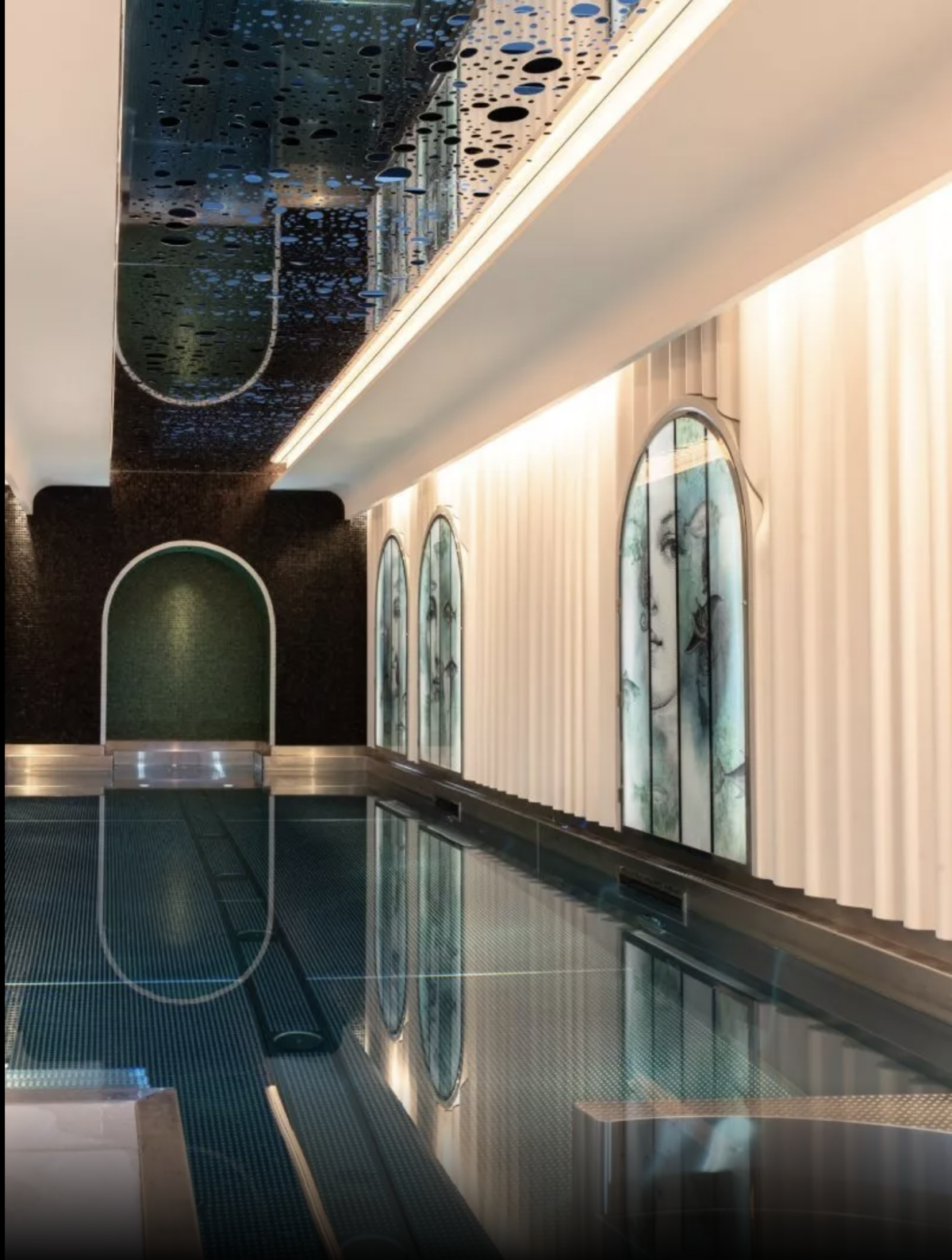
Descending into N Le Spa feels less like entering a wellness facility than crossing into a different rhythm of time. Light softens, sound recedes, and the body is invited — not instructed — to slow. Treatments unfold as rituals rather than routines: warm oils worked in deliberate, unhurried gestures; steam and water alternating to wake the senses; a closing stillness in which nothing is asked of the guest but presence. It is luxury built on sensation rather than spectacle, and it lingers well past the treatment.
Salons Steeped in Prestige
The Salon Royal is the hotel’s beating heart and its greatest theatrical gesture: an elliptical hall beneath a listed glass roof, presided over by a 4.6-meter Baccarat chandelier of 16,800 crystals, said to have been commissioned by Tsar Nicholas II for the Kremlin before history intervened. Heads of state, artists and film stars have all passed beneath it. The Salon Massena offers the same historical weight in a more intimate key. To gather in either is to borrow, for an evening, the warmth of a hundred years of gatherings that came first.
Signature Suites: Universes of Their Own
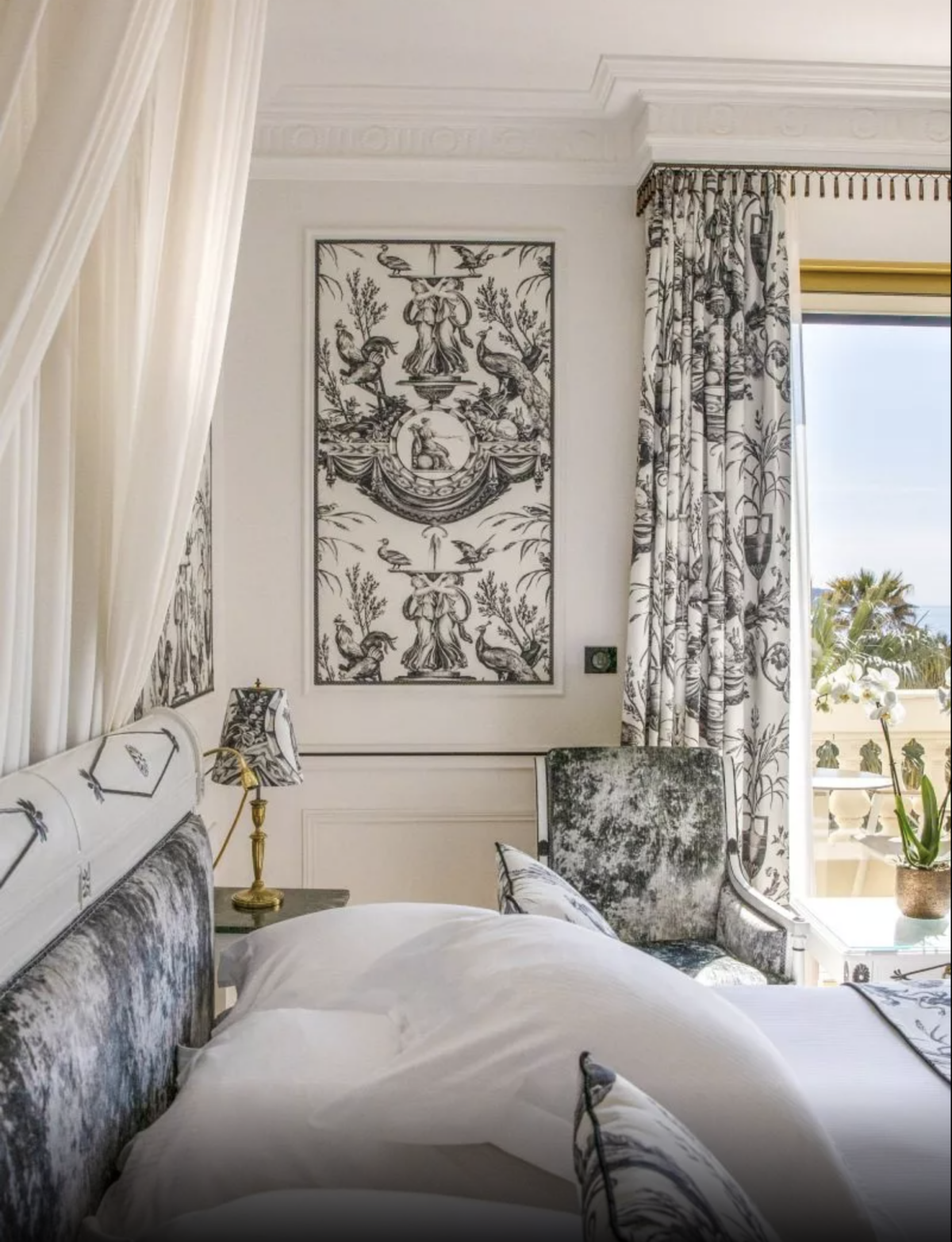
Nowhere is the hotel’s instinct for storytelling clearer than in its Signature Suites. La Parisienne, La Marie-Antoinette, La Montserrat Caballé and La Pompadour are not rooms so much as tributes — each a fully realized world of décor, period detail and homage to the figure who inspired it. To stay in one is to be enveloped, quite literally, by a narrative larger than one’s own.
A Destination, Not a Detour
Le Negresco does not ask to be compared. It asks to be discovered slowly, the way one approaches a museum or a piece of music that will reveal more on every return. As a 5-star hotel in Nice, it offers considerably more than accommodation: a place inside the ongoing story of the French Riviera, where art, history and hospitality remain — as they have for over a hundred years — in constant and elegant conversation. lenegresco.com/en/gallery